King Oyster Mushroom
Antihepatoma and antisarcoma: documented activities of Pleurotus genus lectins
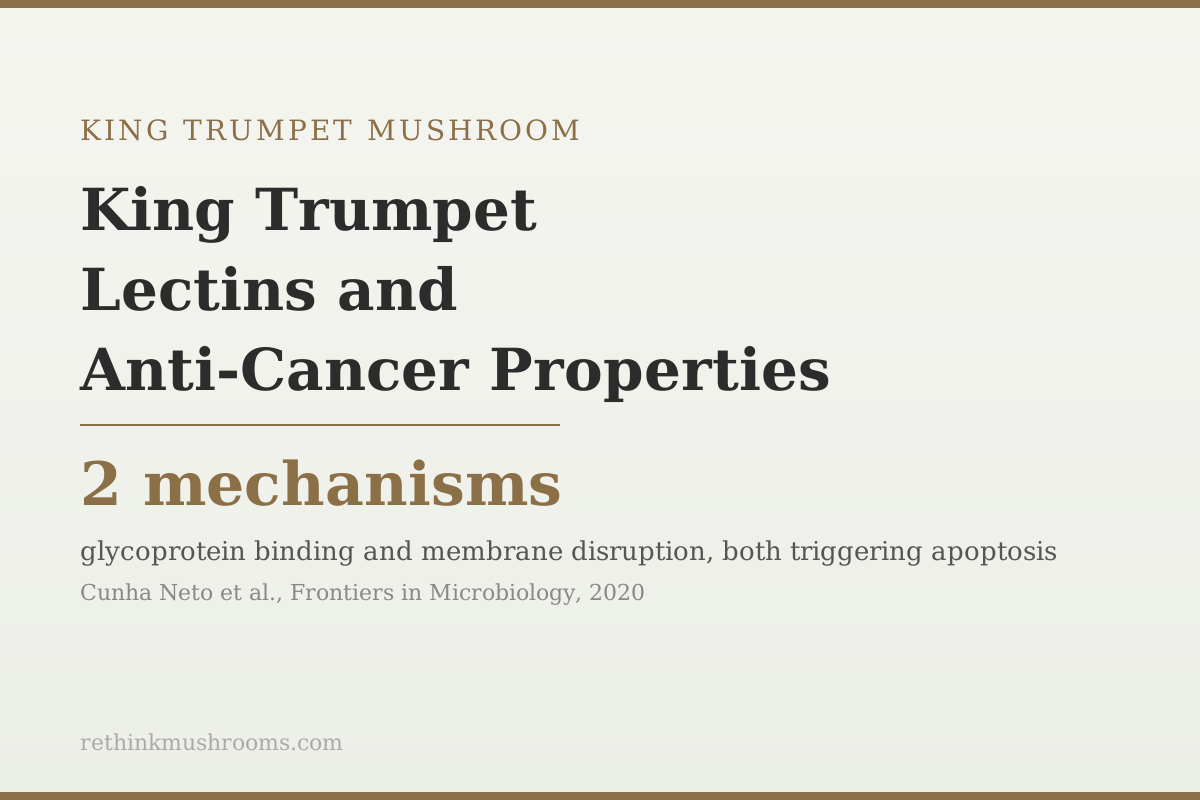
Lectins from Pleurotus genus mushrooms show potent antihepatoma and antisarcoma activity in tumor-bearing mice. The genus offers two distinct anti-cancer protein mechanisms: carbohydrate-binding lectins that recognize sugar structures on cancer cell surfaces, and membrane-disrupting proteins (such as the hemolysin eryngeolysin) that act independently of carbohydrate binding.
Wang et al., Biochem Biophys Res Commun, 2000
PEP
Pleurotus eryngii protein: selectively inhibits colon cancer cells in vitro and in mice while sparing normal colon cells (Yuan et al., 2017)
Eryngeolysin
a 17-kDa hemolysin from P. eryngii, cytotoxic to leukemia cells and antibacterial, acting through membranes rather than carbohydrate binding
Emerging research
P. eryngii-specific protein data is less developed than P. ostreatus; genus-level lectin evidence is robust; species-specific data is ongoing
Wang et al., Biochem Biophys Res Commun, 2000
 View as image ↗
Lectins are the most under-discussed anti-cancer compound class connected to king trumpet mushroom. Polysaccharides, proteins like PEP, and triterpenes get the research attention in most coverage. But lectins, the carbohydrate-binding proteins that recognize specific sugar structures on cell surfaces, represent a separate and mechanistically distinct anticancer pathway that the Pleurotus genus is documented to possess, and that king trumpet (Pleurotus eryngii) parallels through its own characterized bioactive proteins.
Singh and colleagues reviewed mushroom lectins in biomedical research and development in a 2020 International Journal of Biological Macromolecules paper, discussing Pleurotus among the genera whose lectins show anticancer potential.[1] The most potent documented example is a dimeric lectin from the oyster mushroom Pleurotus ostreatus (the same genus as king trumpet) with highly potent antihepatoma and antisarcoma activity in tumor-bearing mice.[6]
For context on king trumpet's other anti-cancer compounds, see king trumpet and cancer: antitumor research. For the broader king trumpet overview, see what is king trumpet mushroom: the meaty mushroom with health benefits.
Key Takeaways
- Lectins are carbohydrate-binding proteins that recognize specific sugar structures on cell surfaces; cancer cells frequently overexpress abnormal surface glycoproteins, making them preferential targets for lectins that recognize those specific sugar patterns
- A characterized Pleurotus lectin (from the same-genus oyster mushroom P. ostreatus) shows potent antihepatoma (liver cancer) and antisarcoma activity in tumor-bearing mice through selective binding to cancer-associated cell-surface sugars; separately, membrane-disrupting proteins in the genus act independently of carbohydrate binding (Wang et al., 2000; Singh et al., 2020)
- Pleurotus eryngii contains characterized bioactive proteins including PEP (an anti-colon-cancer protein) and eryngeolysin, a hemolysin with documented cytotoxicity to leukemia cells and antibacterial activity
- Yuan et al. (2017) characterized PEP, a protein from P. eryngii that selectively inhibits colon cancer cells (in vitro and in mice) through apoptosis and cell-cycle arrest while sparing normal colon cells
- Gu and Sivam (2006) demonstrated that the water-soluble protein/polypeptide fraction from Pleurotus ostreatus (same genus) was most cytotoxic of 20 mushrooms against PC-3 prostate cancer cells, establishing genus-level precedent for Pleurotus protein anti-cancer activity
- P. eryngii-specific lectin research is less developed than some other Pleurotus species; what is established is genus-level lectin precedent and the presence of multiple bioactive proteins (PEP, PEMP, eryngeolysin) in king trumpet
What Lectins Are and Why They Matter for Cancer
Lectins are a class of proteins found in plants, fungi, and some animals that bind specific carbohydrate (sugar) structures with high specificity. Unlike antibodies, which are produced by the immune system, lectins are non-immune proteins that evolved for various biological roles including defense against pathogens and cell-to-cell communication.
The relevance to cancer comes from the cancer cell surface. Normal cells have well-regulated patterns of glycoproteins (proteins decorated with specific sugar chains) on their surfaces. Cancer cells frequently undergo aberrant glycosylation: they produce abnormal sugar patterns on their surface proteins that differ from normal cells. These abnormal glycoprotein patterns serve as distinctive markers.
A lectin that specifically binds one of these cancer-associated glycoprotein patterns can:
- Directly damage the cancer cell membrane, disrupting normal cellular function
- Trigger biochemical signals within the cancer cell that activate the apoptosis (programmed cell death) pathway
- Mark the cancer cell for immune system recognition and destruction
The selectivity is important: lectins that preferentially bind cancer cell surface patterns over normal cell patterns can produce cancer-selective cytotoxicity. This is what distinguishes lectins from broad cytotoxic agents like many chemotherapy drugs, which kill cancer cells and normal cells at similar rates.
Pleurotus Genus Lectins: The Research Foundation
Singh and colleagues' 2020 review of mushroom lectins in biomedical research synthesized work across multiple genera, including Pleurotus, whose lectins are noted for anticancer potential.[1]
The most directly characterized example is a dimeric lectin isolated from the same-genus oyster mushroom (Pleurotus ostreatus): it shows documented antihepatoma (liver cancer) and antisarcoma (connective tissue cancer) activity, prolonging survival in mice bearing hepatoma H-22 and sarcoma S-180 tumors, with hemagglutinating activity inhibited by specific sugars — the signature of carbohydrate-dependent binding.[6] Two distinct mechanisms operate across the genus:
Glycoprotein-dependent mechanism: The lectin binds specific carbohydrate structures overexpressed on cancer cell surfaces. This binding triggers cellular stress responses and, in susceptible cells, activates the apoptosis cascade. The selectivity depends on the specific sugar pattern the lectin recognizes and how much of that pattern is expressed on different cell types.
Glycoprotein-independent membrane mechanism: Separately, membrane-active proteins in the genus disrupt cells through direct interaction with the lipid membrane rather than carbohydrate recognition. The clearest king trumpet example is eryngeolysin, a P. eryngii hemolysin (pore-forming protein) whose cytotoxic activity does not depend on sugar binding. This membrane route can affect cells that a carbohydrate-binding lectin might miss.
The two-mechanism profile means the Pleurotus genus offers redundant anti-cancer protein pathways, reducing the likelihood that a cancer cell escapes by simply downregulating a single target glycoprotein.
King Trumpet's Own Bioactive Proteins
King trumpet does not have a classical anti-cancer lectin as extensively characterized as the P. ostreatus lectin above. Instead, P. eryngii's documented anti-cancer protein inventory centers on two well-studied compounds — the protein PEP and the polypeptide PEMP — plus the membrane-active hemolysin eryngeolysin. Together these establish that king trumpet's lectin-class relevance rests on genus-level precedent combined with its own species-specific bioactive proteins, rather than on a single named king-trumpet lectin.
| Compound / source | Type | Documented anti-cancer activity | Ref |
|---|---|---|---|
| Lectin from P. ostreatus (same genus) | Carbohydrate-binding lectin | Antihepatoma and antisarcoma; prolonged survival in tumor-bearing mice | 6 |
| PEP from P. eryngii | Protein | Selective colon cancer cytotoxicity; apoptosis and cell-cycle arrest (in vitro and in mice) | 2 |
| PEMP from P. eryngii mycelium | Polypeptide | Antitumor against cervical, breast, and stomach cancer cells; immunostimulatory | 3 |
| Water-soluble protein fraction, P. ostreatus | Protein/polypeptide | Most cytotoxic of 20 mushrooms tested against PC-3 prostate cancer cells | 5 |
Eryngeolysin: A Membrane-Active Protein
Eryngeolysin is a 17-kDa hemolysin (a pore-forming protein) isolated from Pleurotus eryngii fruiting bodies, structurally related to ostreolysin from oyster mushroom. Rather than binding carbohydrates like a classical lectin, it interacts directly with cell membranes. Its documented activities include cytotoxicity toward leukemia (L1210) cells, antibacterial activity against Bacillus species, and inhibition of the mitogenic response of immune cells.
The anti-leukemia activity is notable because leukemia (blood cancer) represents a distinct cellular context from solid tumors like hepatoma or sarcoma. Eryngeolysin's cytotoxicity toward leukemia cells extends the cancer-type coverage of king trumpet's bioactive protein profile.
Its inhibition of immune-cell mitogenic responses points to immunomodulatory effects beyond direct cytotoxicity, and its membrane-disrupting nature makes it a concrete example of the carbohydrate-independent mechanism described above.
PEP Protein: Lectin-Like Mechanism in Colon Cancer
Yuan and colleagues (2017) characterized PEP (Pleurotus eryngii protein) and documented its selective inhibition of colon cancer cells while sparing normal colon cells at the same concentrations.[2]
PEP showed activity against colon cancer cells both in vitro and in live mice, with the mechanism involving apoptosis induction and cell cycle arrest. The selectivity for cancer cells over normal cells is functionally important because many compounds that kill cancer cells also damage normal tissue; PEP's preferential effect on cancer cells reduces this concern.
Whether PEP's selectivity comes from cancer-specific glycoprotein recognition (lectin mechanism), other structural binding, or a combination is not fully characterized. But the functional parallel to lectin-type selective toxicity places it within this compound class discussion.
The Genus-Level Prostate Cancer Context
Gu and Sivam's 2006 study remains the most directly relevant genus-level data for Pleurotus lectins and cancer: their screening of 20 edible mushrooms against PC-3 prostate cancer cells found P. ostreatus water-soluble extract as the most cytotoxic, with the active fraction identified as water-soluble proteins and polypeptides.[5]
The water-soluble protein/polypeptide fraction that showed the highest prostate cancer cytotoxicity is the same fraction class that includes lectins and lectin-like proteins. This establishes that Pleurotus genus proteins in this fraction can be highly cytotoxic to cancer cells at a level that outperforms competing mushroom species.
P. eryngii contains equivalent protein fractions (PEP, PEMP polypeptide from Sun et al. 2017[3]). The direct P. eryngii prostate cancer cell test has not been done, but the genus-level evidence and the presence of similar protein fractions in P. eryngii establish the mechanistic plausibility.
Evidence Limitations
King trumpet's lectin research is an emerging area with less species-specific data than its polysaccharide or ergothioneine research. The foundational lectin work is primarily at the genus level (Pleurotus broadly), while the specific characterization for P. eryngii centers on the protein PEP, the polypeptide PEMP, and the hemolysin eryngeolysin rather than a single named king-trumpet lectin.
No human clinical data exists for king trumpet lectins in any indication. The cancer evidence is entirely from cell culture models. The in vivo translation of lectin-type anti-cancer activity is less studied than for polysaccharides, partly because lectins are proteins that may be partially degraded during digestion, raising bioavailability questions for oral consumption.
Ma and colleagues (2014) studied polysaccharides from P. eryngii residue (processing byproduct) and found antitumor activity,[4] adding to the overall P. eryngii anti-cancer compound inventory but not specifically addressing lectins.
The practical framing: king trumpet's lectin profile represents a mechanistically interesting and incompletely studied aspect of its anti-cancer potential, with genuine genus-level evidence and characterized species-specific compounds, but without the in vivo and human trial evidence that would be needed to make clinical claims.
The Bottom Line
Mushroom lectins are carbohydrate-binding proteins that selectively target cancer cell surface glycoproteins and trigger apoptosis; alongside them, membrane-disrupting proteins act independently of carbohydrate binding, giving the Pleurotus genus two distinct anti-cancer protein mechanisms. A characterized P. ostreatus lectin shows antihepatoma and antisarcoma activity in tumor-bearing mice (Wang et al., 2000; Singh et al., 2020). King trumpet (P. eryngii) contains characterized bioactive proteins, including the anti-colon-cancer protein PEP (Yuan et al., 2017) and the hemolysin eryngeolysin, which shows cytotoxicity to leukemia cells. P. eryngii-specific lectin data is less developed than some other Pleurotus species, but genus-level precedent and species-specific compound characterization establish this protein class as a legitimate area of king trumpet anti-cancer research.
Frequently Asked Questions
Sources & References
- 1RTHM-01287·Singh, Ram Sarup et al. (2020). “Mushroom lectins in biomedical research and development..” International journal of biological macromolecules.Study breakdown →PubMed →↩
- 2RTHM-00932·Yuan, Biao et al. (2017). “In vitro and in vivo inhibitory effects of a Pleurotus eryngii protein on colon cancer cells..” Food & function.Study breakdown →PubMed →↩
- 3RTHM-00915·Sun, Yanan et al. (2017). “Antioxidant, antitumor and immunostimulatory activities of the polypeptide from Pleurotus eryngii mycelium..” International journal of biological macromolecules.Study breakdown →PubMed →↩
- 4RTHM-00624·Ma, Gaoxing et al. (2014). “Purification, characterization and antitumor activity of polysaccharides from Pleurotus eryngii residue..” Carbohydrate polymers.Study breakdown →PubMed →↩
- 5RTHM-00183·Gu, Yu-Huan et al. (2006). “Cytotoxic effect of oyster mushroom Pleurotus ostreatus on human androgen-independent prostate cancer PC-3 cells..” Journal of medicinal food.Study breakdown →PubMed →↩
- 6RTHM-00074·Wang, H et al. (2000). “A new lectin with highly potent antihepatoma and antisarcoma activities from the oyster mushroom Pleurotus ostreatus..” Biochemical and biophysical research communications.Study breakdown →PubMed →↩