Stress and Adaptogens
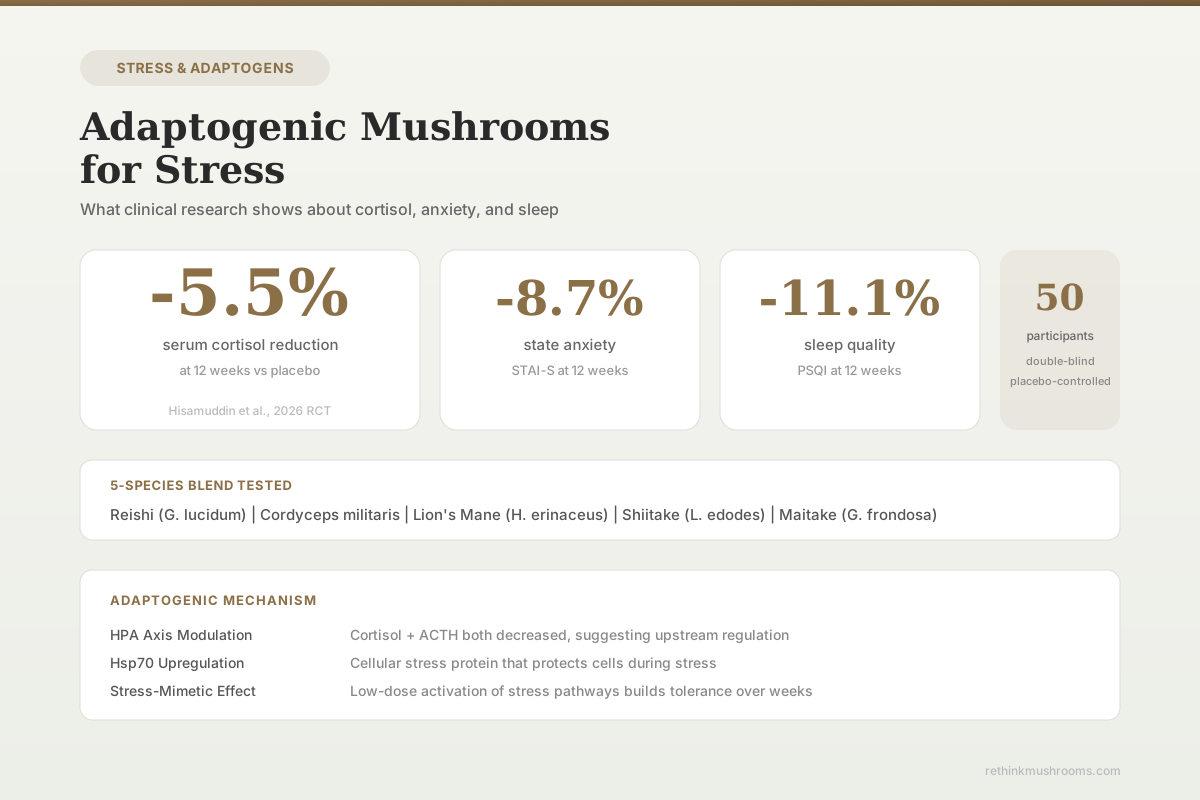
-5.5% Cortisol Reduction
A 2026 randomized, double-blind, placebo-controlled trial found a five-mushroom blend reduced serum cortisol by 5.5% and state anxiety by 8.7% over 12 weeks. Cortisol changes were measurable by week 6.
Hisamuddin et al., Brain and Behavior, 2026
-8.7% Anxiety
STAI-S scores at 12 weeks
5 Species Tested
reishi, cordyceps, lion's mane, shiitake, maitake
50 Participants
randomized, double-blind, placebo-controlled
Hisamuddin et al., Brain and Behavior, 2026
 View as image ↗
If you only read one thing
Adaptogenic mushrooms like reishi, cordyceps, and lion's mane have real clinical evidence for stress relief — but they're not fast. The best human trial found a five-mushroom blend lowered cortisol by 5.5% and anxiety scores by 8.7% after 12 weeks of daily use, with effects building gradually from week 6 onward. They don't work like anxiety medication. Instead, they slowly recalibrate how your body handles the stress hormone system over weeks. Reishi has the most human data. Cordyceps helps more with physical stress. Lion's mane is better studied for protecting your thinking under stress. All three need consistent daily use for at least 4–6 weeks before you're likely to notice anything.
Key Takeaways
- A 2026 double-blind RCT of 50 participants found a 5-mushroom blend reduced serum cortisol by 5.5% and state anxiety (STAI-S) by 8.7% at 12 weeks (Hisamuddin et al., Brain and Behavior, 2026)
- Cortisol reduction was detectable by week 6 (-4.4%), with sleep quality improving by 11.1% at 12 weeks in the same trial
- A 2005 placebo-controlled study of Ganoderma lucidum polysaccharide extract found reduced fatigue and improved well-being in neurasthenia patients after 8 weeks (Tang et al., Journal of Medicinal Food, 2005)
- Adaptogens work at the molecular level partly by upregulating heat shock protein Hsp70, which protects cells during stress (Panossian et al., Current Clinical Pharmacology, 2009)
- Lion's mane showed a near-significant trend toward reduced subjective stress (p=0.051) after 28 days at 1.8g/day in a pilot study of 41 healthy adults (Docherty et al., Nutrients, 2023)
- The adaptogenic concept requires normalization of function, not stimulation or suppression, distinguishing it from anxiolytics or stimulants
What Makes a Mushroom an Adaptogen
Not every medicinal mushroom qualifies as an adaptogen. The classification requires specific evidence of stress-normalizing effects, not just general health benefits.
Panossian and Wikman published the most comprehensive pharmacological review of adaptogens in Medicinal Research Reviews in 2021.[1] They traced the concept from its origins in Soviet military pharmacology through modern molecular biology. The key mechanism they identified: adaptogens function as mild stress-mimetics at low doses. They activate the same signaling pathways that the body uses to cope with severe stress, but at a low enough intensity to build tolerance without causing harm.
The molecular targets include the hypothalamic-pituitary-adrenal (HPA) axis (which controls cortisol production), molecular chaperones like heat shock protein 70 (Hsp70, which protects cells from stress damage), and stress-activated protein kinases like JNK1.
An earlier systematic review by the same group in 2009 examined the clinical evidence for adaptogens in fatigue specifically.[2] They found that the stress-protective effect of adaptogens is related to their ability to regulate homeostasis through the HPA axis and through upregulation of Hsp70. The Hsp70 connection is significant: this protein is a universal cellular defense mechanism. Cells that produce more Hsp70 are more resilient to heat, oxidative stress, toxins, and inflammation.
Mushrooms that have been studied for these specific adaptogenic mechanisms include reishi (triterpenes modulating the HPA axis), cordyceps (cordycepin affecting cellular energy and adrenal function), and lion's mane (nerve growth factor stimulation reducing stress-related cognitive decline).
The 2026 Cortisol Trial
The strongest human evidence for adaptogenic mushrooms and stress comes from a 2026 randomized, double-blind, placebo-controlled trial by Hisamuddin and colleagues.[3]
Fifty participants were randomized to receive either a five-mushroom blend (reishi, cordyceps militaris, lion's mane, shiitake, and maitake) or placebo for 12 weeks. The study measured three primary outcomes: serum cortisol levels, state anxiety (STAI-S questionnaire), and sleep quality (Pittsburgh Sleep Quality Index).
The results at 12 weeks:
- Serum cortisol: decreased by 5.5% in the mushroom group versus minimal change in placebo
- State anxiety (STAI-S): decreased by 8.7% in the mushroom group versus 4.9% in placebo (p=0.011)
- Sleep quality (PSQI): improved by 11.1% in the mushroom group versus minimal change in placebo (p<0.001)
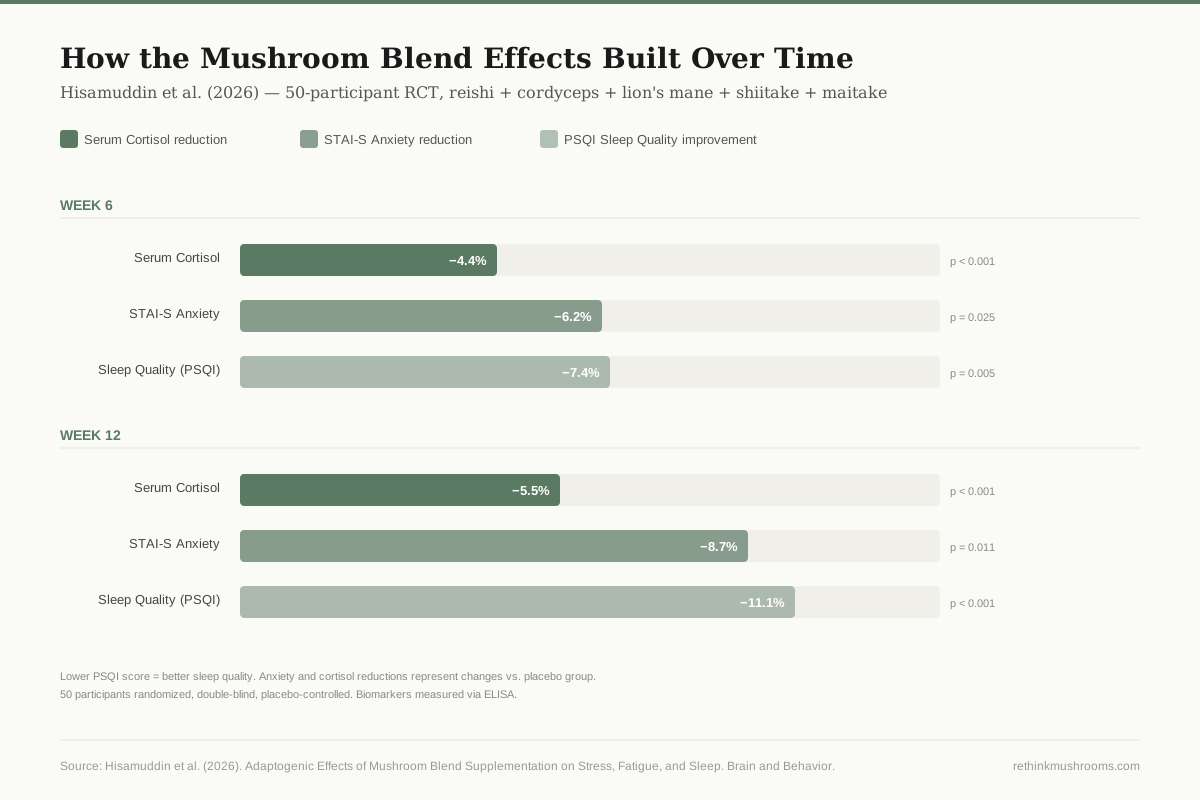
The cortisol reduction was already detectable at week 6 (-4.4%), suggesting the adaptogenic effect builds gradually. This timeline is consistent with the adaptogenic model: rather than acute anxiolytic effects (like a benzodiazepine that works in 30 minutes), adaptogens produce gradual physiological normalization over weeks.
Clinical Evidence · 2026 RCT
How the Mushroom Blend Effects Built Over Time
50 participants (randomized, double-blind, placebo-controlled). Cortisol and ACTH measured via ELISA. STAI-S = State-Trait Anxiety Inventory. PSQI = Pittsburgh Sleep Quality Index (lower score = better sleep).
Source: Hisamuddin et al. (2026), Brain and Behavior
 View as image ↗
This is one of the few human studies to measure both a biomarker (cortisol) and subjective outcomes (anxiety, sleep) simultaneously for a mushroom product. Most mushroom stress studies rely on self-reported outcomes alone.
Hisamuddin et al. (2026) · Brain and Behavior
- Population
- 50 adults (randomized, double-blind, placebo-controlled)
- Intervention
- Five-mushroom blend (reishi, cordyceps, lion's mane, shiitake, maitake) — 12 weeks
- Comparator
- Placebo
- Finding
- Serum cortisol −5.5%, STAI-S anxiety −8.7% (p=0.011), sleep quality −11.1% (p<0.001) at 12 weeks. ACTH also fell (p<0.001), indicating upstream HPA action.
positive Strong design for a mushroom study. Effect sizes are modest but the biomarker data (cortisol + ACTH) makes this more credible than self-report-only trials.
Hisamuddin et al. (2026), Brain and Behavior
- Cell & Lab Studiescompleted
Triterpene and beta-glucan activity on stress signaling pathways documented in multiple cell models
- Animal Studiescompleted
HPA axis modulation, Hsp70 upregulation, and sleep promotion shown in rodent models (reishi, lion's mane)
- Case Reportscompleted
Scattered reports, not controlled; not a meaningful evidence tier here
- Small Human Trialscurrent
2026 RCT (n=50, blend); Tang 2005 (n=132, reishi extract); Docherty 2023 (n=41, lion's mane pilot)
- Large Randomized Trial (200+)missing
No large-scale RCT for any single adaptogenic mushroom on stress outcomes
- Meta-Analysismissing
Insufficient trials for pooled analysis; individual species data too heterogeneous
Adaptogenic mushrooms have plausible mechanisms and small positive human trials — most notably the 2026 RCT with cortisol biomarker data. The evidence is more credible than many supplement categories, but still limited by small sample sizes, heterogeneous preparations, and a lack of single-species large trials.
Assessment based on published RCTs and systematic reviews, 2005–2026
Reishi: The Most-Studied Adaptogenic Mushroom
Reishi has the longest traditional use history for calming and stress resistance, and the most human clinical data.
Tang and colleagues conducted a randomized, double-blind, placebo-controlled study in 2005 testing a Ganoderma lucidum polysaccharide extract (Ganopoly) in Chinese patients with neurasthenia, a condition characterized by chronic fatigue, weakness, and psychological distress.[4] Patients received 1,800mg of Ganopoly three times daily for 8 weeks. The reishi group showed reduced fatigue and improved sense of well-being compared to placebo.
Pazzi and colleagues tested reishi in women with fibromyalgia in a 2020 double-blind pilot trial.[5] Participants took 6g/day of micro-milled Ganoderma lucidum fruiting body for 6 weeks. The results did not reach statistical significance for between-group differences. However, within the reishi group, trends toward improved happiness, life satisfaction, and reduced depression were observed compared to baseline. With only 6 weeks of treatment and a small sample size, the study was likely underpowered to detect the modest effects typical of adaptogenic interventions.
Mitra and colleagues published a 2024 study testing reishi supplementation at 500 mg and 1,000 mg daily doses in 78 sedentary female college students, measuring psychological, physiological, and fitness parameters across a 30-day trial.[6] The 1,000 mg group showed significant improvements versus placebo on heart rate, VO2max, physical work capacity (PWC170), and right-hand grip strength; the abstract emphasizes physical fitness outcomes more than psychological stress changes specifically.
Tang et al. (2005) · Journal of Medicinal Food
- Population
- 132 Chinese patients with neurasthenia (chronic fatigue and distress)
- Intervention
- Ganopoly (Ganoderma lucidum polysaccharide extract) 1,800mg × 3/day — 8 weeks
- Comparator
- Placebo
- Finding
- Significant reduction in fatigue and improved well-being in the reishi group versus placebo
positive Largest reishi-only RCT on stress-adjacent outcomes. Neurasthenia cohort may not generalize to healthy adults with normal stress levels.
Tang et al. (2005), Journal of Medicinal Food
Yao and colleagues demonstrated in 2021 that reishi extract promoted sleep in mice through a gut-microbiota-dependent, serotonin-involved pathway.[7] The mechanism: reishi polysaccharides altered gut microbiome composition, which in turn increased serotonin (5-HT) signaling, shortening sleep latency and extending sleep duration. While this is an animal study, it provides a plausible biological mechanism for the sleep improvements observed in the 2026 human trial. For the broader species-by-species breakdown of which mushrooms work best for stress, that is covered elsewhere.
Cordyceps: The Energy-Side Adaptogen
Cordyceps operates differently from reishi. Where reishi's adaptogenic profile leans toward calming and immune modulation, cordyceps acts more on energy production and physical stress resistance.
Hirsch and colleagues demonstrated in a 2017 RCT that cordyceps militaris supplementation improved VO2max (+4.8 ml/kg/min) and time to exhaustion after 3 weeks in 28 healthy adults.[8] Exercise is a physical stressor, and improved tolerance to exercise-induced stress fits the adaptogenic model.
Early pharmacological research showed that Cordyceps sinensis extracts increased corticosterone production in cultured rat adrenal cells in a dose-dependent manner, suggesting a direct interaction with adrenal steroid production. This is relevant to the adaptogenic concept because the adrenal glands are where cortisol is produced, and modulating adrenal function is central to stress adaptation.
The Hisamuddin 2026 trial included cordyceps militaris as one of five species in the blend, so its individual contribution cannot be isolated.[3] Whether cordyceps alone produces the same cortisol-lowering effect seen in the blend is unknown.
Lion's Mane: The Cognitive Stress Buffer
Lion's mane does not fit the classic adaptogen profile as neatly as reishi or cordyceps. Its primary research focus is cognitive function, not stress resistance. But stress and cognition are linked: chronic stress impairs cognitive function through cortisol-mediated hippocampal damage, and interventions that protect cognitive function under stress overlap with adaptogenic effects.
Docherty and colleagues found in a 2023 double-blind pilot study that 1.8g/day of lion's mane for 28 days produced a near-significant trend toward reduced subjective stress in 41 healthy adults (p=0.051).[9] The same study found improved reaction time on a cognitive task after a single dose. The stress finding did not reach the conventional p<0.05 threshold, but the direction of the effect was consistent with adaptogenic activity.
Lion's mane stimulates nerve growth factor (NGF) production, which supports neuronal health and repair. Under chronic stress conditions, NGF levels decline. By maintaining NGF signaling, lion's mane may buffer the cognitive consequences of stress even if it does not directly lower cortisol.
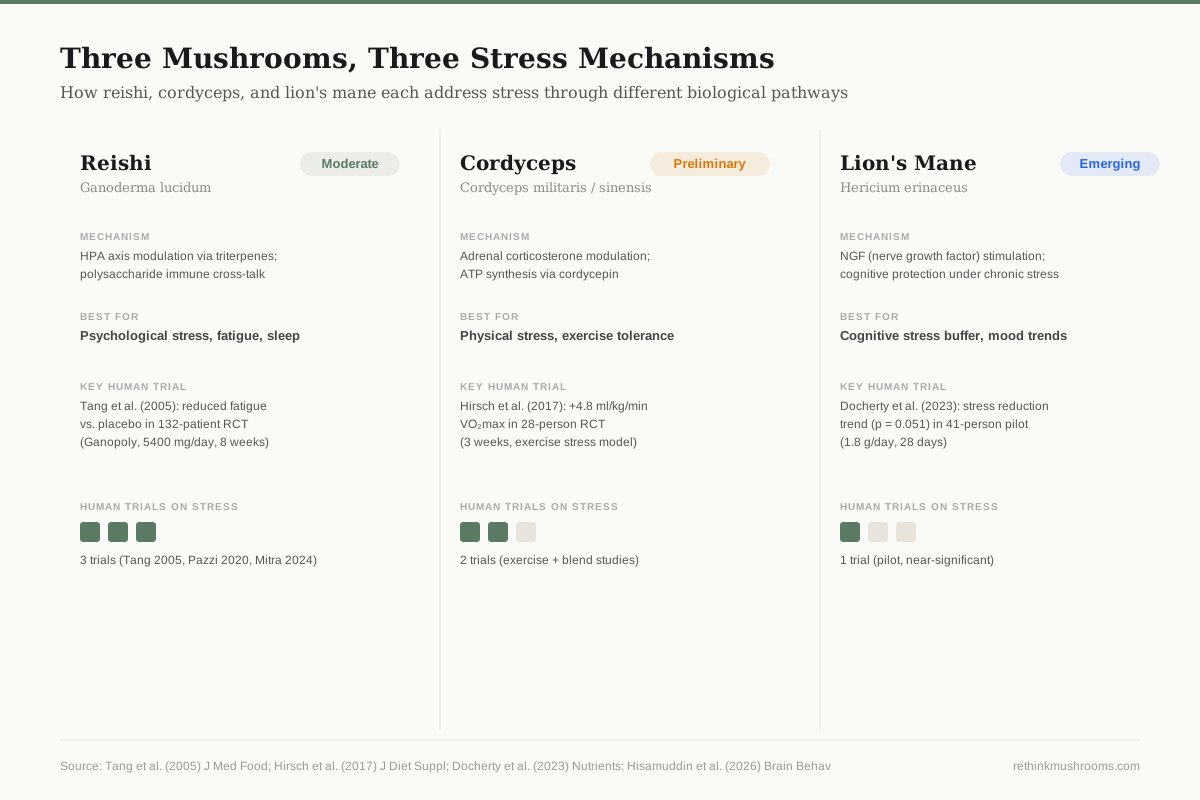
Species Comparison
Three Mushrooms, Three Stress Mechanisms
Reishi
Ganoderma lucidum
Mechanism
HPA axis modulation via triterpenes; polysaccharide immune cross-talk
Best for
Psychological stress, fatigue, sleep quality
Key evidence
Tang et al. (2005) — reduced fatigue in 132-patient RCT; Hisamuddin 2026 blend
Cordyceps
Cordyceps militaris
Mechanism
Adrenal corticosterone modulation; ATP synthesis via cordycepin
Best for
Physical stress, exercise tolerance, energy under load
Key evidence
Hirsch et al. (2017) — +4.8 ml/kg/min VO₂max in 28-person RCT
Lion's Mane
Hericium erinaceus
Mechanism
NGF (nerve growth factor) stimulation; cognitive protection under chronic stress
Best for
Cognitive stress buffer; mood and stress trends
Key evidence
Docherty et al. (2023) — stress reduction trend (p = 0.051) in 41-person pilot
Source: Published clinical literature, 2005–2026
 View as image ↗
How Adaptogenic Mushrooms Work: The HPA Axis
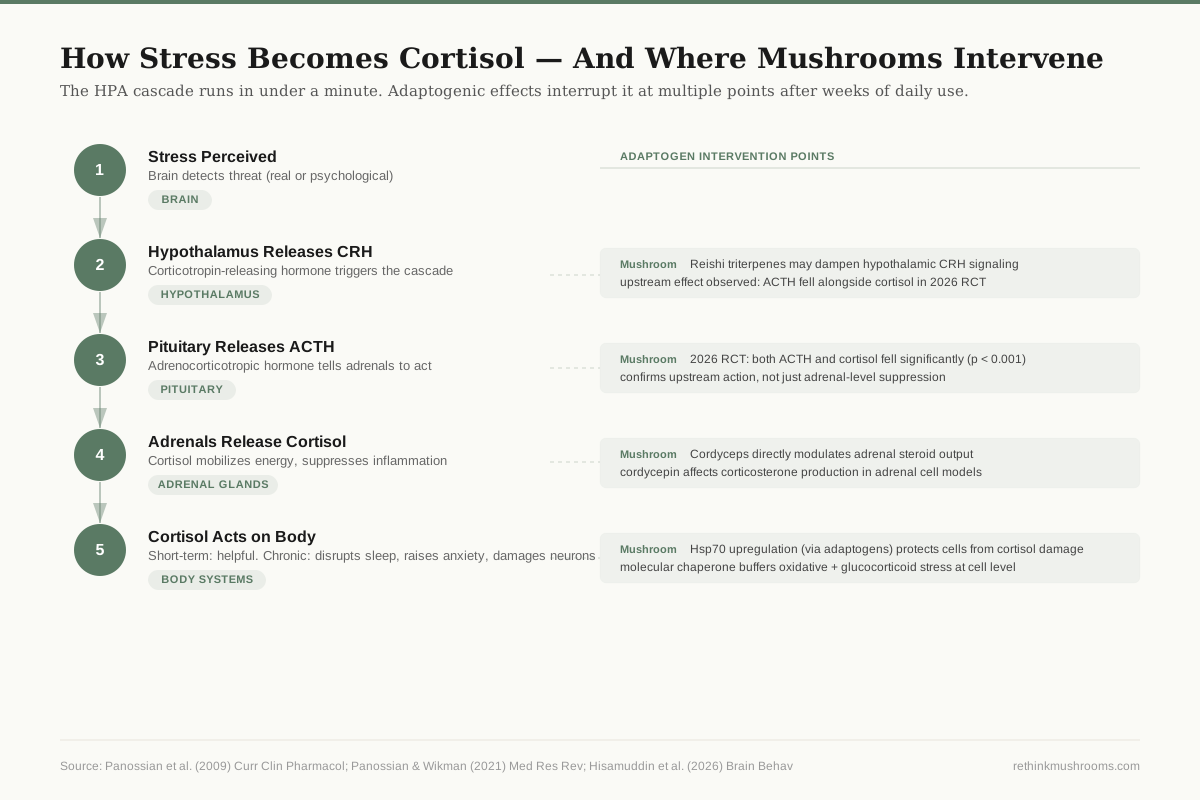
The HPA (hypothalamic-pituitary-adrenal) axis is the body's central stress-response system. When the brain perceives stress, the hypothalamus releases CRH (corticotropin-releasing hormone), which signals the pituitary to release ACTH (adrenocorticotropic hormone), which signals the adrenal glands to produce cortisol. Cortisol mobilizes energy, suppresses inflammation, and sharpens focus in the short term. When the stressor passes, cortisol levels drop through negative feedback.
Chronic stress breaks this feedback loop. Cortisol stays elevated. The HPA axis becomes dysregulated. Sleep deteriorates. Anxiety increases. Cognitive function declines.
Adaptogenic mushrooms appear to act at multiple points in this cascade. Reishi triterpenes modulate inflammatory cytokines that feed into HPA axis activation. Mushroom polysaccharides (beta-glucans) influence immune signaling, which cross-talks with the stress response. Cordycepin from cordyceps affects cellular energy metabolism, which influences how cells respond to cortisol.
The Hisamuddin 2026 trial measured both cortisol and ACTH, finding reductions in both.[3] The fact that ACTH declined alongside cortisol suggests the mushroom blend acted upstream, on the pituitary or hypothalamic signal, not just at the adrenal level. This is consistent with true adaptogenic activity rather than simple adrenal suppression. For the full HPA axis and cortisol regulation mechanism, that pathway is explored in depth separately. And the reishi-specific stress pathway via HPA axis and cordyceps is its own dedicated review.
Mechanism · HPA Axis
How Stress Becomes Cortisol — And Where Mushrooms Intervene
The HPA cascade runs in under a minute. Adaptogenic effects interrupt it at multiple points after weeks of daily use.
Stress perceived
BrainBrain detects threat (real or psychological)
Hypothalamus releases CRH
HypothalamusCorticotropin-releasing hormone triggers the cascade
Reishi triterpenes may dampen CRH signaling
Pituitary releases ACTH
PituitaryAdrenocorticotropic hormone tells adrenals to act
2026 RCT: both ACTH and cortisol fell (p < 0.001)
Adrenals release cortisol
Adrenal GlandsCortisol mobilizes energy, suppresses inflammation
Cordyceps directly modulates adrenal steroid output
Cortisol acts on body
Body SystemsShort-term: helpful. Chronic: disrupts sleep, raises anxiety
Hsp70 upregulation (via adaptogens) protects cells from cortisol damage
Source: Panossian et al. (2009, 2021); Hisamuddin et al. (2026)
 View as image ↗
The Limitations of Current Evidence
The adaptogenic mushroom research is promising but not conclusive. Several gaps remain:
Dose standardization: The Hisamuddin trial used a proprietary blend. Tang used a polysaccharide extract. Pazzi used micro-milled whole fruiting body. Different preparations deliver different bioactive profiles at different doses. There is no agreed-upon standardized dose for any adaptogenic mushroom.
Individual species vs blends: The strongest cortisol data (Hisamuddin 2026) used a five-mushroom blend. It is impossible to determine which species contributed what proportion of the effect. Single-species adaptogenic trials for mushrooms are rare and often underpowered.
Duration: Most studies lasted 6-12 weeks. The long-term effects of daily adaptogenic mushroom use, including whether tolerance develops, are not characterized.
Population diversity: The clinical trials were conducted in Malaysia, China, Japan, and India. Whether these findings generalize across populations with different genetic backgrounds, diets, and baseline stress levels is unknown.
Mechanism confirmation: The HPA axis mechanism is supported by the cortisol and ACTH data from the 2026 trial, but full pathway mapping in humans (which receptor, which cell type, which signaling cascade) has not been done for any mushroom adaptogen.
Research Gaps
What would it take?
What would it take to confirm adaptogenic mushrooms reliably reduce stress in humans?
Large RCT (200+ participants) for a single mushroom species on cortisol
All current trials are small; the best (n=50) used a multi-species blend
Standardized, pharmaceutical-grade single-species extracts
Some manufacturers are pursuing standardization; not yet clinically validated
Dose-finding trials to establish minimum effective dose
Current studies used widely varying doses with no head-to-head comparison
Long-term safety data (6+ months)
Longest controlled trial was 12 weeks; tolerance and long-term effects unknown
Replication in Western populations
All major trials conducted in Asia; population generalizability unconfirmed
Assessment based on published literature and current research gaps, 2026
The Bottom Line
Adaptogenic mushrooms, particularly reishi, cordyceps, and lion's mane, have growing clinical evidence for stress-buffering effects. A 2026 RCT demonstrated measurable cortisol reduction (-5.5%), anxiety reduction (-8.7%), and sleep improvement (-11.1%) from a five-mushroom blend over 12 weeks. The effects build gradually, consistent with the adaptogenic model of physiological normalization. Reishi has the most human data across multiple trials. Cordyceps adds physical stress resistance. Lion's mane buffers cognitive consequences of stress. The evidence is strongest for multi-species blends and for reishi alone, weaker for other individual species.
Frequently Asked Questions
Sources & References
- 1RTHM-00711·Panossian, Alexander G et al. (2021). “Evolution of the adaptogenic concept from traditional use to medical systems: Pharmacology of stress- and aging-related diseases..” Medicinal research reviews.Study breakdown →PubMed →↩
- 2RTHM-00168·Panossian, Alexander et al. (2009). “Evidence-based efficacy of adaptogens in fatigue, and molecular mechanisms related to their stress-protective activity..” Current clinical pharmacology.Study breakdown →PubMed →↩
- 3RTHM-00959·Hisamuddin, Ahmad Safiyyu'd-Din et al. (2026). “Adaptogenic Effects of Mushroom Blend Supplementation on Stress, Fatigue, and Sleep: A Randomised, Double-Blind, and Placebo-Controlled Trial..” Brain and behavior.Study breakdown →PubMed →↩
- 4RTHM-00088·Tang, Wenbo et al. (2005). “A randomized, double-blind and placebo-controlled study of a Ganoderma lucidum polysaccharide extract in neurasthenia..” Journal of medicinal food.Study breakdown →PubMed →↩
- 5RTHM-00648·Pazzi, Francesco et al. (2020). “Ganoderma lucidum Effects on Mood and Health-Related Quality of Life in Women with Fibromyalgia..” Healthcare (Basel.Study breakdown →PubMed →↩
- 6RTHM-00895·Mitra, Sudeep et al. (2024). “Efficacy of Lingzhi or Reishi Medicinal Mushroom Ganoderma lucidum (Agaricomycetes) Supplementation on Psychological Stress and Selective Fitness Profile Parameters in Female College Students in West Bengal, India..” International journal of medicinal mushrooms.Study breakdown →PubMed →↩
- 7RTHM-00731·Yao, Chunyan et al. (2021). “Ganoderma lucidum promotes sleep through a gut microbiota-dependent and serotonin-involved pathway in mice..” Scientific reports.Study breakdown →PubMed →↩
- 8RTHM-00473·Hirsch, Katie R et al. (2017). “Cordyceps militaris Improves Tolerance to High-Intensity Exercise After Acute and Chronic Supplementation..” Journal of dietary supplements.Study breakdown →PubMed →↩
- 9RTHM-00821·Docherty, Sarah et al. (2023). “The Acute and Chronic Effects of Lion's Mane Mushroom Supplementation on Cognitive Function, Stress and Mood in Young Adults: A Double-Blind, Parallel Groups, Pilot Study..” Nutrients.Study breakdown →PubMed →↩