Poria (Wolfiporia extensa)
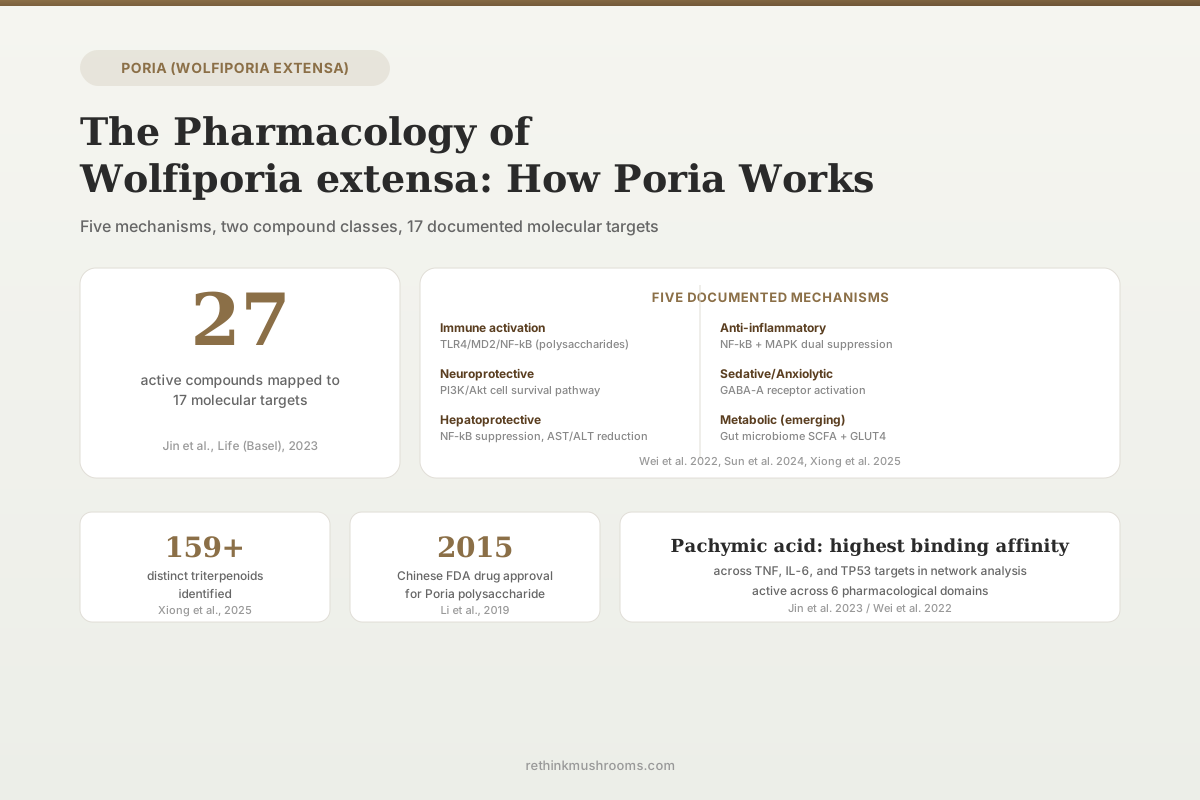
27 active compounds
A 2023 network pharmacology analysis mapped 27 bioactive compounds in Wolfiporia extensa to 17 molecular targets in the body, with pachymic acid showing the highest binding affinity across inflammatory pathways.
Jin et al., Life (Basel), 2023
159+
distinct triterpenoids identified in Wolfiporia extensa (Xiong 2025)
5 mechanisms
immune, anti-inflammatory, neuroprotective, hepatoprotective, metabolic
2015
year Chinese FDA approved Poria polysaccharide as a cancer adjuvant drug
Jin et al., Life (Basel), 2023
 View as image ↗
Wolfiporia extensa doesn't have one mechanism. A 2023 network pharmacology study mapped 27 of its bioactive compounds to 17 different molecular targets, with pachymic acid (Poria's primary bioactive triterpene) showing the highest binding affinity across multiple inflammatory pathways.[8] Most coverage of Poria describes it as an "immune booster" and stops there, leaving out the anti-inflammatory mechanisms, the neuroprotective pathway, the sedative effect via brain receptors, the liver protection data, and the emerging gut microbiome research. Understanding wolfiporia extensa pharmacology requires separating those mechanisms from each other, because they involve different compounds, different cellular targets, and different quality of evidence. For an overview of Poria itself and its 2,500-year history in traditional medicine, see What Is Poria (Fu Ling)? One of the Most Important Mushrooms in TCM.
Key Takeaways
- Network pharmacology analysis identified 27 core bioactive compounds in Wolfiporia extensa acting on 17 inflammatory targets; pachymic acid showed the highest binding affinity across TNF, IL-6, and TP53 pathways (Jin et al., 2023).
- Poria's beta-glucan (pachyman) activates macrophages by binding to TLR4/MD2 receptors on their surface, triggering a signaling chain that causes immune cells to polarize to their active, infection-fighting state (Sun et al., 2024).
- Pachymic acid suppresses inflammation by shutting down two separate pathways inside cells: NF-κB (the master inflammation switch) and MAPK (the amplification cascade), reducing TNF-α, IL-6, and IL-1β simultaneously (Gui et al., 2021).
- In a rat stroke model, pachymic acid pretreatment reduced brain infarct volume and neurological deficit scores via PI3K/Akt signaling, a cell-survival pathway that protects nerve tissue from damage (Pang et al., 2020).
- Pachymic acid activates GABA-A receptors, the brain's primary calming receptors, providing the molecular basis for Poria's traditional use for anxiety and sleep (Wei et al., 2022, Experimental and Therapeutic Medicine).
- Poria polysaccharides significantly reduced liver injury markers AST and ALT in acetaminophen-overdosed mice while suppressing NF-κB inflammatory cytokines, validating its classical hepatoprotective use (Wu et al., 2018).
Poria Has 27 Active Compounds and 17 Molecular Targets. Most Articles Cover One.
The standard description of Poria's pharmacology is: it "modulates the immune system." That is accurate for one of its mechanisms, attributable to one of its compound classes, operating via one receptor pathway. It leaves out most of the picture.
Jin and colleagues ran a network pharmacology analysis to systematically map what Wolfiporia extensa actually does at the molecular level.[8] They identified 27 core bioactive compounds in Wolfiporia extensa that interact with 17 key inflammatory targets. The method involves computationally docking each compound against known target proteins, predicting binding affinity, and then filtering for biologically significant interactions. Pachymic acid showed the highest binding affinity across TNF (a primary inflammatory signaling protein), IL-6 (a cytokine that drives both acute and chronic inflammation), and TP53 (a tumor suppressor protein). This does not mean Poria is a treatment for any of these conditions. It means the compounds have identified molecular targets and that the biological activity is not random.
A 2022 comprehensive review by Wei and colleagues examined pachymic acid specifically across all published pharmacological domains and found it active in six distinct categories: anti-inflammatory, antitumor, neuroprotective, hepatoprotective, hypoglycemic, and sedative.[7] Each involves a different molecular mechanism and a different target organ. The article below organizes the evidence by mechanism, because the compound driving each effect is not always the same one.
| Compound Class | Target Pathway | Pharmacological Effect | Key Study |
|---|---|---|---|
| Pachyman (beta-glucan) | TLR4/MD2/NF-κB | Immune activation | Sun 2024 |
| Pachymic acid (triterpene) | NF-κB + MAPK | Anti-inflammatory | Lee 2017, Gui 2021 |
| Pachymic acid | PI3K/Akt | Neuroprotective | Pang 2020 |
| Pachymic acid | GABA-A receptor | Sedative | Wei 2022 |
| Pachymic acid | GLUT4 upregulation | Antidiabetic | Wei 2022 |
| Polysaccharides | NF-κB suppression | Hepatoprotective | Wu 2018 |
For detail on the individual compounds behind these mechanisms, see Poria Bioactive Compounds: Pachymic Acid, Triterpenoids, and Beta-Glucans.
Immune Activation: How Poria's Beta-Glucan Trains Macrophages
Poria's primary polysaccharide, called pachyman, is a beta-glucan with a structural backbone of linked glucose units. The specific arrangement of those linkages (a main chain connected via one type of bond, with side branches connected via another) determines how the immune system recognizes it.
Sun and colleagues identified which Poria polysaccharide fraction activates macrophages most strongly and mapped the molecular route.[9] The active fraction (designated PCP-W1) binds to TLR4 and its partner protein MD2, which together form a detection unit on the surface of macrophages (the immune system's large patrol cells that engulf pathogens and coordinate immune responses). Binding this receptor complex triggers a signaling chain inside the cell that causes it to polarize to its M1 state, the active, infection-fighting configuration. The downstream result: production of NO (a molecule that kills pathogens), IL-6 (an inflammatory signal that recruits more immune cells), TNF-α (a primary inflammation amplifier), and CD86 (a surface protein that marks the macrophage as activated and ready to present threats to the rest of the immune system).
Li and colleagues, reviewing the structural and mechanistic basis for Poria polysaccharide's drug approval in China, confirmed that pachyman's specific beta-glucan backbone activates both Dectin-1 (a receptor that specifically recognizes beta-glucan structures) and TLR receptors.[4] The Chinese FDA's 2015 approval of a Poria polysaccharide oral solution as a cancer adjuvant drug represents one of the few instances where a medicinal mushroom polysaccharide has received drug-level regulatory recognition.
Chemical modifications to pachyman increase its potency. Chen and colleagues showed that a sulfated, carboxymethylated version of pachyman produced significantly stronger macrophage activation and tumor cell inhibition than the unmodified compound.[1] This has implications for supplement quality: the extraction and processing method affects the biological activity of the polysaccharide fraction.
The Anti-Inflammatory Mechanism: Shutting Down Two Master Switches Simultaneously
Inflammation in the body is controlled by a hierarchy of signaling proteins inside cells. NF-κB acts as a master inflammation switch: when activated, it turns on dozens of pro-inflammatory genes. MAPK is a separate amplification cascade that runs in parallel, accelerating the inflammatory response through different downstream proteins. Most anti-inflammatory drugs target one of these pathways. Poria's pachymic acid has demonstrated activity against both.
Lee and colleagues used a bioactivity-guided isolation approach, systematically testing which triterpenoids from Poria sclerotia most strongly inhibited inflammatory signaling in macrophages exposed to a bacterial toxin stimulus.[2] Pachymic acid showed the strongest inhibition of NO production, confirming NF-κB inhibition as the primary anti-inflammatory mechanism. The isolation approach was valuable because it tested individual compounds rather than crude extract, making the pharmacological attribution cleaner.
Gui and colleagues tested this in a living animal model of lung infection.[6] Rats given a bacterial toxin to induce pneumonia and then treated with pachymic acid showed dose-dependent reductions in TNF-α, IL-6, and IL-1β (three primary inflammation-driving cytokines). The mechanism involved two simultaneous suppressions: NF-κB p65 was prevented from moving into the cell nucleus (where it would activate inflammation genes), and both p38 and ERK variants of MAPK were less activated than in untreated animals. Shutting down both pathways simultaneously explains why the effect on cytokine levels was broad rather than limited to one target.
For a dedicated deep-dive on this mechanism, see Pachymic Acid and Anti-Inflammatory Mechanisms.
Neuroprotection and the Surprising Sedative Pathway
The same triterpene driving Poria's anti-inflammatory effects also has a second, structurally separate action in the nervous system: it activates GABA-A receptors.
GABA-A receptors are the primary "slow down" receptors in the brain. When activated, they reduce the rate at which neurons fire. Benzodiazepine drugs (prescribed for anxiety and insomnia) also work via GABA-A receptors, which is the same mechanism. A 2022 comprehensive pharmacological review of pachymic acid by Wei and colleagues confirmed GABA-A receptor activation as a documented sedative mechanism and listed it alongside the NF-κB anti-inflammatory and PI3K/Akt neuroprotective pathways as distinct pharmacological actions of the same compound.[7]
For the neuroprotective effect, Pang and colleagues tested pachymic acid in a rat model of stroke, where blood supply to part of the brain is briefly cut off and then restored, causing tissue damage from the injury itself and from the inflammatory response that follows.[5] Animals pretreated with pachymic acid showed significantly reduced neurological deficit scores (measures of motor and coordination function), smaller infarct volume (the area of dead tissue), and lower oxidative stress markers. The mechanism: pachymic acid activated PI3K/Akt signaling (a cell survival pathway that tells damaged cells not to self-destruct and suppresses the downstream inflammatory response that worsens stroke injury).
The GABA-A and PI3K/Akt pathways are distinct. One provides the molecular explanation for Poria's classical TCM use for "calming the Heart and quieting the spirit." The other provides a potential therapeutic mechanism for neuroprotection. Both derive from the same triterpene compound.
For the evidence on Poria's sedative and anxiolytic applications, see Poria and GABAergic Activity: Anxiolytic Mechanisms.
Liver Protection: The Most Clearly Demonstrated Effect in Living Animals
Of Poria's documented pharmacological effects, hepatoprotection (liver protection) has some of the clearest animal model data. Wu and colleagues tested Poria polysaccharides in mice given a liver-damaging overdose of acetaminophen, which causes injury through two routes: direct chemical damage to liver cells, and a secondary inflammatory cascade driven by NF-κB activation.[3]
Animals treated with Poria polysaccharides showed significantly lower blood levels of AST and ALT, the liver enzymes that leak into the bloodstream when liver cells are injured. They also showed suppressed inflammatory cytokine release in liver tissue, consistent with NF-κB inhibition being the shared mechanism with pachymic acid's anti-inflammatory effect. The finding validates the traditional hepatoprotective use of Poria while linking it to a specific molecular pathway rather than leaving it at the level of "it's good for the liver."
The evidence base here is animal studies, not clinical trials. The mechanism is plausible and internally consistent with other documented NF-κB effects of Poria compounds. Whether these results translate to clinically meaningful liver protection in humans at supplement doses remains untested.
Gut Microbiota and Metabolic Regulation: The Newest Research Frontier
The most recent comprehensive review of Wolfiporia extensa pharmacology, published by Xiong and colleagues in 2025, added two mechanisms to the picture that had not been systematically documented in earlier reviews.[10]
The first: gut microbiota modulation. Poria polysaccharides appear to selectively stimulate beneficial gut bacteria (primarily Lactobacillus and Bifidobacterium species) while reducing populations of pathogenic bacteria. This produces increased production of short-chain fatty acids (SCFA), small molecules that gut bacteria make when fermenting fiber, which play important roles in colon health, blood sugar regulation, and immune signaling from the gut to the rest of the body.
The second: metabolic regulation via PI3K/AKT insulin signaling. Beyond the neuroprotective PI3K/Akt pathway documented in stroke models, Poria's compounds appear to also activate this pathway in metabolic tissue, improving insulin receptor sensitivity and glucose uptake. The GLUT4 upregulation noted in Wei 2022's pachymic acid review offers a complementary mechanism: GLUT4 is the protein that transports glucose into muscle and fat cells in response to insulin signaling; upregulating it improves how efficiently cells clear glucose from the blood.
A 2026 narrative update by Guo and colleagues confirmed that the expanded pharmacological profile now includes renal protection, digestive function improvement, and glucose-lipid metabolism modulation, in addition to the better-established immune, anti-inflammatory, and sleep effects.[11] The metabolic and gut microbiota research is the least clinically developed of all Poria's documented mechanisms.
What the Evidence Actually Supports: A Tier-by-Tier Assessment
The mechanisms above are established to varying degrees:
Well-characterized at the molecular level (in vitro and animal data): The TLR4/MD2/NF-κB immune activation pathway (Sun 2024), NF-κB and MAPK anti-inflammatory dual suppression (Lee 2017, Gui 2021), GABA-A receptor activation (Wei 2022), and PI3K/Akt neuroprotection (Pang 2020) are each supported by multiple independent studies with identified molecular targets.
Regulatory-level validation: Li and colleagues documented that the Chinese FDA approved a Poria polysaccharide oral solution as a cancer adjuvant drug in 2015, one of the few cases where a medicinal mushroom polysaccharide reached drug-level regulatory status in any major jurisdiction.[4]
Early-stage emerging evidence: Gut microbiota modulation and the full metabolic profile (Xiong 2025, Guo 2026) are newer findings without yet-substantial clinical trial data.
What is not yet established: Most of Poria's pharmacological mechanisms are documented in cell cultures and animal models. Large, blinded randomized controlled trials in humans testing specific Poria preparations for specific outcomes are limited. The mechanistic picture is unusually complete for a botanical. The clinical translation picture is substantially less so.
The Bottom Line
Wolfiporia extensa operates through five documented pharmacological mechanisms: immune activation via TLR4/MD2 macrophage stimulation; inflammation reduction by simultaneously suppressing NF-κB and MAPK pathways; neuroprotection and sedation via PI3K/Akt survival signaling and GABA-A receptor activation; liver protection through NF-κB suppression; and emerging metabolic effects including gut microbiota modulation and insulin sensitization. Pachymic acid is the single most pharmacologically active compound, appearing across four of these five mechanisms. The molecular evidence is unusually well-characterized for a traditional mushroom; the human clinical evidence, though strengthened by a Chinese FDA drug approval for Poria polysaccharide in 2015, remains sparser than the preclinical data suggests it should be.
Frequently Asked Questions
Sources & References
- 1RTHM-00332·Chen, Xiaoyu et al. (2010). “Immunopotentiation and anti-tumor activity of carboxymethylated-sulfated beta-(1-->3)-d-glucan from Poria cocos..” International immunopharmacology.Study breakdown →PubMed →↩
- 2RTHM-00886·Lee, Seoung Rak et al. (2017). “Bioactivity-guided isolation of anti-inflammatory triterpenoids from the sclerotia of Poria cocos using LPS-stimulated Raw264.7 cells..” Bioorganic chemistry.Study breakdown →PubMed →↩
- 3RTHM-01016·Wu, Ka et al. (2018). “Hepatoprotective effects exerted by Poria Cocos polysaccharides against acetaminophen-induced liver injury in mice..” International journal of biological macromolecules.Study breakdown →PubMed →↩
- 4RTHM-01091·Li, Xiulian et al. (2019). “Molecular basis for Poria cocos mushroom polysaccharide used as an antitumour drug in China..” Journal of cellular and molecular medicine.Study breakdown →PubMed →↩
- 5RTHM-01273·Pang, Yingqiao et al. (2020). “Pachymic acid protects against cerebral ischemia/reperfusion injury by the PI3K/Akt signaling pathway..” Metabolic brain disease.Study breakdown →PubMed →↩
- 6RTHM-01360·Gui, Yanjun et al. (2021). “Pachymic acid inhibits inflammation and cell apoptosis in lipopolysaccharide (LPS)-induced rat model with pneumonia by regulating NF-κB and MAPK pathways..” Allergologia et immunopathologia.Study breakdown →PubMed →↩
- 7RTHM-01632·Wei, Chunyong et al. (2022). “Pharmacological profiles and therapeutic applications of pachymic acid (Review)..” Experimental and therapeutic medicine.Study breakdown →PubMed →↩
- 8RTHM-01713·Jin, Juri et al. (2023). “Bioactive Compounds and Signaling Pathways of Wolfiporia extensa in Suppressing Inflammatory Response by Network Pharmacology..” Life (Basel.Study breakdown →PubMed →↩
- 9RTHM-01999·Sun, Mingjie et al. (2024). “Screening of Poria cocos polysaccharide with immunomodulatory activity and its activation effects on TLR4/MD2/NF-κB pathway..” International journal of biological macromolecules.Study breakdown →PubMed →↩
- 10RTHM-02212·Xiong, Qi et al. (2025). “Progress in the study of bioactivity, chemical composition and pharmacological mechanism of action in Wolfiporia cocos (F.A. Wolf) Ryvarden & Gilb..” Frontiers in pharmacology.Study breakdown →PubMed →↩
- 11RTHM-02230·Guo, Yanquan et al. (2026). “Research progress on the pharmacological effects of Poria cocos: a narrative update..” Frontiers in nutrition.Study breakdown →PubMed →↩