Antrodia Liver Health
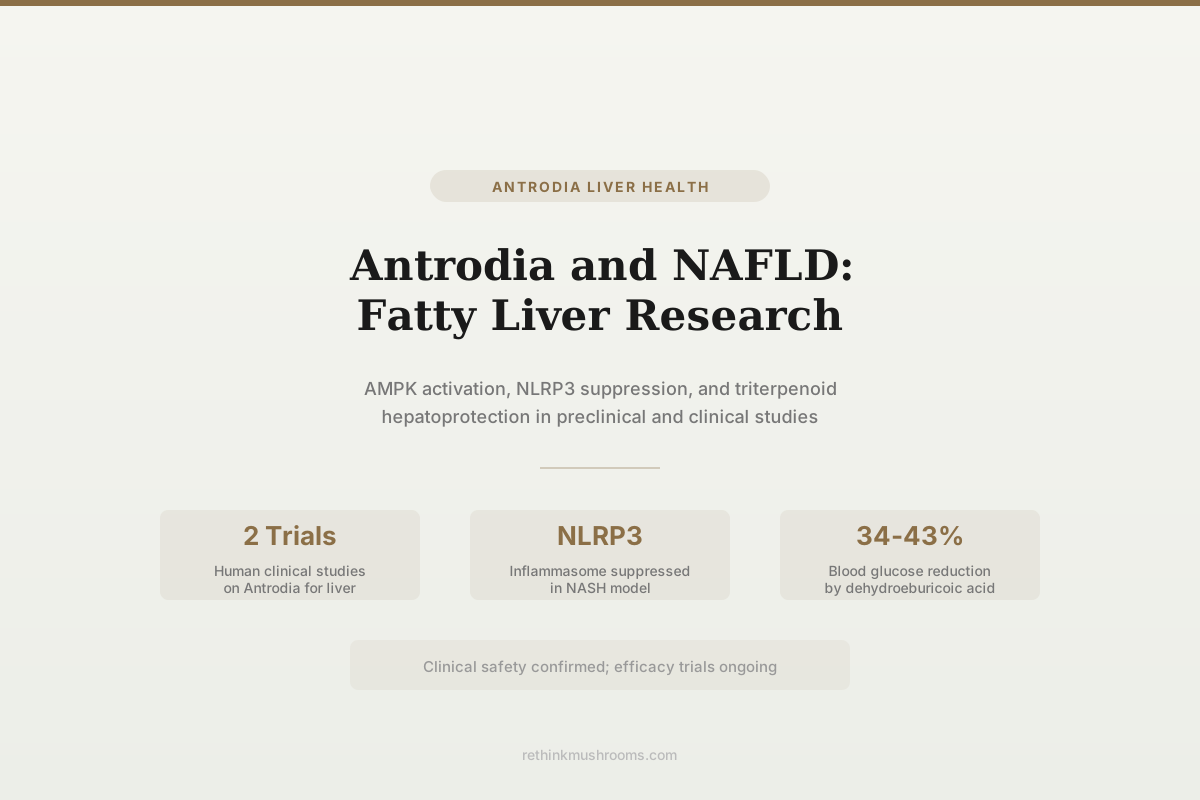
AMPK activation
Antrodia cinnamomea extract increased phosphorylated AMPK while decreasing SREBP and fatty acid synthase in high-fat diet mice, reversing hepatic fat accumulation.
Peng et al., American Journal of Chinese Medicine, 2017
2 Human Trials
on Antrodia for liver function
NLRP3
inflammasome suppressed in NASH model
8 Studies
reviewed on Antrodia and fatty liver
Peng et al., American Journal of Chinese Medicine, 2017
 View as image ↗
Non-alcoholic fatty liver disease (NAFLD) affects roughly 25% of the global population and progresses in some patients to non-alcoholic steatohepatitis (NASH), fibrosis, and eventually cirrhosis. Current treatment relies primarily on weight loss and lifestyle modification because no drug has received universal approval specifically for NAFLD. Antrodia camphorata, a medicinal fungus endemic to Taiwan with a long history of use for liver conditions, has accumulated preclinical and early clinical evidence for reducing hepatic fat accumulation and liver inflammation. For a broader view of Antrodia's hepatoprotective properties, see the overview on Antrodia for liver health.
The evidence base includes two human clinical trials (one in NASH patients, one in subjects with alcoholic liver injury), multiple mouse studies using high-fat diet and chemical injury models, and mechanistic work identifying specific molecular targets. The triterpenoid compounds unique to Antrodia, particularly antcins and related compounds, appear central to its hepatoprotective activity.
Key Takeaways
- Antrodia extract reversed high-fat diet-induced fatty liver in C57BL/6 mice by activating AMPK and suppressing SREBP, FAS, and HMGCoA reductase (Peng et al., 2017)
- In a randomized, double-blind trial of 28 NASH patients, Antrodia mycelium (420 mg/day for 6 months) produced no adverse events, suggesting safety for this population (Chiou et al., 2021)
- Antrodia suppressed NLRP3 inflammasome activation in LPS-stimulated macrophages and HepG2 cells in vitro, and attenuated MCD-induced steatohepatitis in mice (Yen et al., 2020)
- Dehydroeburicoic acid from Antrodia lowered blood glucose by 34-43% and reduced hepatic fat through enhanced PPARalpha and AMPK phosphorylation in high-fat diet mice (Kuo et al., 2016)
- Golden-Antrodia camphorata (300 mg/day for 12 weeks) reduced serum AST, ALT, and triglycerides in 80 subjects with elevated liver enzymes after alcohol consumption (Yen et al., 2022)
- Antcin K and antcin B at 50 mg/kg matched the hepatoprotective effects of 100 mg/kg silymarin against CCl4-induced liver injury in mice (Li et al., 2017)
How NAFLD Develops and Why It Resists Treatment
NAFLD begins when triglycerides accumulate in hepatocytes beyond normal levels, a condition called steatosis. In roughly 20-30% of NAFLD patients, the disease progresses to NASH, characterized by hepatocyte injury, inflammation (driven by immune cell activation and cytokine release), and progressive fibrosis. The "multiple hit" model proposes that insulin resistance, oxidative stress, endoplasmic reticulum stress, and gut-derived endotoxins all contribute simultaneously.
Two molecular regulators sit at the center of hepatic fat metabolism: AMPK (AMP-activated protein kinase), which promotes fatty acid oxidation when activated, and SREBP (sterol regulatory element-binding protein), which promotes fat synthesis when active. In NAFLD, AMPK activity is suppressed and SREBP is upregulated, creating a metabolic environment that favors fat accumulation. Compounds that shift this balance, activating AMPK while suppressing SREBP, are of particular interest in NAFLD research. Several Antrodia compounds appear to do exactly this.
AMPK Activation and Hepatic Fat Reduction
Peng et al. (2017) provided the most direct evidence for Antrodia's effect on NAFLD pathology.[1] C57BL/6 mice were fed a high-fat diet for 10 weeks with or without Antrodia cinnamomea extract (ACE) at 0.5%, 1%, or 2% of the diet. The HFD-induced elevations in body weight, body fat, serum free fatty acids, triglycerides, total cholesterol, and LDL/HDL ratio were all reversed by ACE treatment.
At the liver level, ACE reduced AST and ALT (markers of hepatocyte damage) and hepatic lipid deposits that had accumulated from the high-fat diet. The molecular mechanism was clear: ACE increased phosphorylated AMPK (pAMPK) while decreasing SREBP, fatty acid synthase (FAS), AGPAT (a triglyceride synthesis enzyme), and HMGCoA reductase (the rate-limiting enzyme in cholesterol synthesis).[1]
Chemical analysis of the extract revealed it was rich in triterpenes: antcin K was the most abundant, followed by sulphurenic acid, eburicoic acid, antcin C, dehydrosulphurenic acid, antcin B, and propanoic acid. This triterpene profile is consistent with fruiting body-derived preparations and distinct from mycelial extracts.
Kuo et al. (2016) tested one of these compounds in isolation.[2] Dehydroeburicoic acid (TT) administered to high-fat diet mice for 4 weeks lowered blood glucose by 34.2-43.4%, comparable to metformin (36.5%). TT enhanced AMPK phosphorylation in both liver and skeletal muscle, increased hepatic PPARalpha expression (promoting fatty acid oxidation), and decreased FAS expression (reducing fat synthesis). The combined metabolic effect was reduced hepatic fat stores and lower blood triglycerides. These findings overlap with the research on Antrodia and blood sugar, highlighting how metabolic improvements in glucose handling and lipid metabolism are mechanistically linked. For the full picture of how Antrodia affects multiple metabolic targets simultaneously, see Antrodia and metabolic syndrome.
NLRP3 Inflammasome Suppression in NASH
NAFLD progression to NASH is driven by inflammation, and the NLRP3 inflammasome has emerged as a central mediator. When activated, the NLRP3 complex triggers caspase-1, which processes pro-IL-1beta and pro-IL-18 into their active inflammatory forms and can trigger pyroptosis (inflammatory cell death) in Kupffer cells and hepatocytes.
Yen et al. (2020) demonstrated that Antrodia cinnamomea extract suppressed NLRP3 inflammasome activation in LPS-stimulated RAW264.7 macrophages and HepG2 hepatocellular carcinoma cells in vitro, and attenuated steatohepatitis in mice fed a methionine/choline deficient (MCD) diet, the standard rodent NASH model.[3] The extract reduced expression of NLRP3 inflammasome components, cleaved caspase-1, and mature IL-1beta. In the MCD-fed mice, ACE lowered serum SGPT and reduced oxidative stress markers and inflammatory infiltrate characteristic of NASH.
This finding addresses a different aspect of NAFLD than the AMPK/SREBP metabolic pathway. The NLRP3 inflammasome drives the transition from simple steatosis (which many people live with asymptomatically) to the inflammatory NASH state that causes progressive liver damage. If Antrodia can suppress this inflammatory trigger, it would be relevant specifically to preventing disease progression rather than just reducing fat accumulation.
The connection between NLRP3 and NAFLD is well established in the broader hepatology literature. Kupffer cells (liver-resident macrophages) are the primary sensors of danger signals from damaged hepatocytes, and their NLRP3 activation amplifies the local inflammatory response through IL-1beta release. This recruits neutrophils and monocytes, creating a feed-forward cycle of inflammation and hepatocyte death. Interrupting this cycle at the NLRP3 level is the rationale behind several pharmaceutical NAFLD candidates currently in clinical development. Antrodia's ability to suppress this same target in preclinical models is mechanistically aligned with mainstream drug development strategies, though the active compound(s) responsible have not been fully isolated.
Cao et al. (2022) added another mechanistic dimension, showing that Antrodia and its compound dehydroeburicoic acid attenuated NAFLD by upregulating aldehyde dehydrogenase 2 (ALDH2) activity.[4] ALDH2 detoxifies reactive aldehydes generated during lipid peroxidation, a process amplified in fatty liver. Enhancing ALDH2 activity reduces the oxidative stress burden on hepatocytes, offering a protective mechanism complementary to both AMPK activation and NLRP3 suppression.
Triterpenoids as Hepatoprotective Agents
Li et al. (2017) systematically compared Antrodia preparations from different cultivation methods for hepatoprotective activity against CCl4-induced liver injury in mice.[5] Wild-growing fruiting bodies, wood-cultured fruiting bodies, and dish cultures showed more potent activity than mycelial preparations, a finding consistent with the higher triterpenoid content in fruiting bodies versus mycelia.
Among 29 triterpenoid compounds screened for hepatoprotective activity in HepG2 cells, antcin B and antcin K emerged as the most effective. In the mouse model, 50 mg/kg of either compound matched the hepatoprotective effect of 100 mg/kg silymarin, reducing serum ALT and AST and decreasing liver necrosis. The mechanism involved suppression of NF-kappaB activation and downstream inflammatory mediators including TNF-alpha, IL-1beta, iNOS, and COX-2.[5]
This study is relevant to NAFLD for two reasons. First, it identifies specific compounds (antcin K and antcin B) responsible for liver protection, moving beyond crude extract testing. Second, the anti-inflammatory mechanism through NF-kappaB suppression is directly relevant to the inflammatory component of NASH progression.
Liu et al. (2012) reviewed the broader hepatoprotective evidence for Antrodia across multiple liver injury models, noting that both fruiting body and mycelial preparations showed activity but through potentially different mechanisms and at different potencies.[6] The review emphasized that cultivation technique affects the chemical composition and biological activity of the final product. For more on how Antrodia protects against alcohol-related liver damage specifically, that sibling article covers the distinct mechanisms relevant to ethanol-induced injury.
Human Clinical Evidence
Two clinical trials provide preliminary human data, though neither specifically enrolled NAFLD/NASH patients diagnosed by biopsy.
Chiou et al. (2021) conducted a randomized, double-blind, placebo-controlled trial in 28 patients with NASH.[7] Participants received three capsules daily containing either 420 mg of Antrodia cinnamomea mycelium (ACM) or starch placebo for 6 months, with hospital visits every 3 months for anthropometric measurements, blood biochemistry, immune function assays, inflammatory cytokine measurements, and FibroMax testing. No participants experienced adverse events during the study period. The safety profile is the primary takeaway: this is the first controlled trial demonstrating that Antrodia mycelium can be administered to NASH patients for 6 months without safety concerns. Efficacy data from this small trial should be interpreted cautiously given the sample size.
Yen et al. (2022) enrolled 80 participants with elevated gamma-glutamyl transferase levels (60-180 U/L, indicating liver stress from alcohol consumption) in a randomized, placebo-controlled study.[8] The treatment group received 300 mg/day of Golden-Antrodia camphorata (containing antroquinonol) for 12 weeks. At 12 weeks, the treatment group showed statistically lower serum AST, ALT, and triglyceride levels compared to placebo, with no differences in safety parameters. While this trial targeted alcoholic liver injury rather than NAFLD, the triglyceride reduction is relevant to fatty liver pathology, and the larger sample size (n=80) provides more robust safety data.
Neither trial used liver biopsy or advanced imaging to measure hepatic fat content directly. Both measured serum liver enzymes as surrogate markers. Larger trials with histological or imaging endpoints would be needed to confirm whether the improvements in liver enzyme levels correspond to actual reductions in hepatic steatosis or fibrosis.
Limitations Across the Evidence Base
Animal-to-human translation gaps. Most mechanistic data comes from high-fat diet mice (C57BL/6 or ICR strains). Mouse NAFLD models develop steatosis rapidly under extreme dietary conditions that do not mirror the gradual, multi-factorial development of human NAFLD over decades.
Small clinical trial sizes. The two human studies enrolled 28 and 80 participants respectively. Phase 3 NAFLD drug trials typically require hundreds to thousands of participants with biopsy-confirmed disease. The current clinical evidence is hypothesis-generating, not definitive.
Extract standardization varies. Between studies, researchers used fruiting body extracts, mycelial extracts, fermented broth, and isolated compounds at different concentrations. Li et al. (2017) documented that cultivation method dramatically affects hepatoprotective potency. Commercial Antrodia products do not follow the specific preparations used in published research.
NAFLD heterogeneity. NAFLD encompasses a spectrum from benign steatosis to progressive NASH to cirrhosis. Different disease stages may respond differently to Antrodia's mechanisms. The animal models primarily test early intervention, not reversal of established disease.
Conflict of interest considerations. Several studies were conducted by Taiwanese groups with connections to Antrodia cultivation or product development. While this does not invalidate the findings, independent replication by groups without commercial interests would strengthen confidence.
The Bottom Line
Antrodia camphorata demonstrates multiple mechanisms relevant to NAFLD: AMPK activation with concurrent SREBP suppression reduces hepatic fat synthesis, NLRP3 inflammasome suppression addresses the inflammatory driver of NASH progression, and specific triterpenoids (antcin K, antcin B, dehydroeburicoic acid) provide targeted hepatoprotection comparable to silymarin in animal models. Two human trials confirm short-term safety in liver disease patients, with one showing reductions in liver enzymes and triglycerides. The evidence is promising but early-stage: larger trials with imaging or biopsy endpoints are needed to establish clinical relevance for NAFLD treatment.
Frequently Asked Questions
Sources & References
- 1RTHM-00487·Peng, Chiung-Huei et al. (2017). “Antrodia cinnamomea Prevents Obesity, Dyslipidemia, and the Derived Fatty Liver via Regulating AMPK and SREBP Signaling..” The American journal of Chinese medicine.Study breakdown →PubMed →↩
- 2RTHM-00431·Kuo, Yueh-Hsiung et al. (2016). “Dehydroeburicoic Acid from Antrodia camphorata Prevents the Diabetic and Dyslipidemic State via Modulation of Glucose Transporter 4, Peroxisome Proliferator-Activated Receptor α Expression and AMP-Activated Protein Kinase Phosphorylation in High-Fat-Fed Mice..” International journal of molecular sciences.Study breakdown →PubMed →↩
- 3RTHM-00666·Yen, I-Chuan et al. (2020). “Antrodia Cinnamomea Attenuates Non-Alcoholic Steatohepatitis by Suppressing NLRP3 Inflammasome Activation In Vitro and In Vivo..” The American journal of Chinese medicine.Study breakdown →PubMed →↩
- 4RTHM-00747·Cao, Yi-Ni et al. (2022). “Antrodia cinnamomea and its compound dehydroeburicoic acid attenuate nonalcoholic fatty liver disease by upregulating ALDH2 activity..” Journal of ethnopharmacology.Study breakdown →PubMed →↩
- 5RTHM-00479·Li, Zi-Wei et al. (2017). “Hepatoprotective activities of Antrodia camphorata and its triterpenoid compounds against CCl4-induced liver injury in mice..” Journal of ethnopharmacology.Study breakdown →PubMed →↩
- 6RTHM-00255·Liu, Yen-Wenn et al. (2012). “Protective effects of Antrodia cinnamomea against liver injury..” Journal of traditional and complementary medicine.Study breakdown →PubMed →↩
- 7RTHM-00681·Chiou, Ya-Ling et al. (2021). “Hepatoprotective Effect of Antrodia cinnamomea Mycelium in Patients with Nonalcoholic Steatohepatitis: A Randomized, Double-Blind, Placebo-Controlled Trial..” Journal of the American College of Nutrition.Study breakdown →PubMed →↩
- 8RTHM-00805·Yen, Yu-Ting et al. (2022). “Clinical Benefits of Golden-Antrodia Camphorata Containing Antroquinonol in Liver Protection and Liver Fat Reduction After Alcoholic Hepatitis..” Frontiers in pharmacology.Study breakdown →PubMed →↩