Antrodia and Metabolic Health
4 metabolic targets
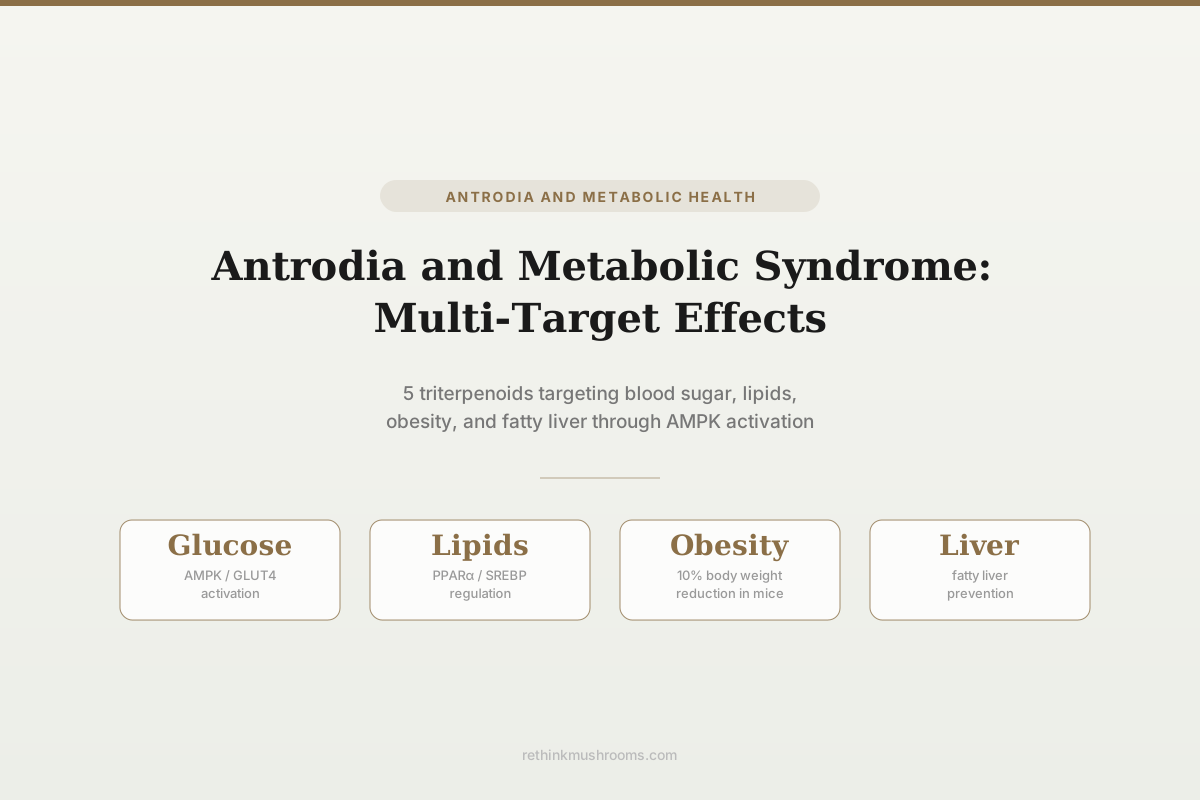
Antrodia camphorata compounds simultaneously address hyperglycemia, hyperlipidemia, obesity, and fatty liver disease in animal models, with antcin K matching metformin's glucose-lowering effect at 40 mg/kg in high-fat-diet mice.
Kuo et al., Evidence-Based Complementary and Alternative Medicine, 2016
5 compounds
isolated triterpenoids with antidiabetic activity
10% body weight
reduction in HFD mice with Antrodia extract
0 human trials
all metabolic data remains preclinical
Kuo et al., Evidence-Based Complementary and Alternative Medicine, 2016
 View as image ↗
Metabolic syndrome is not one disease but a cluster: elevated blood sugar, abnormal cholesterol, excess abdominal fat, and high blood pressure occurring together, each amplifying the others' damage. Most pharmaceutical approaches target one component at a time. Antrodia camphorata, the Taiwanese medicinal mushroom, contains at least five distinct triterpenoid compounds that target multiple metabolic pathways simultaneously in animal models. Antcin K lowered blood glucose, triglycerides, total cholesterol, and leptin in high-fat-diet mice, matching metformin's glucose-lowering effect at 40 mg/kg.[1]
Every study discussed here used rodent models. No Antrodia compound has completed human clinical trials for any metabolic condition. The multi-target activity is preclinically documented but clinically unvalidated. For background on the individual compounds involved, see antcins A, B, C, and K: individual compound profiles. For the broader compound class, see antcins: the unique triterpenoids in Antrodia camphorata.
Key Takeaways
- Antcin K lowered blood glucose and matched metformin's effect at 40 mg/kg while simultaneously reducing triglycerides, total cholesterol, and leptin in HFD mice (Kuo et al., 2016)
- Ergostatrien-3beta-ol reduced fasting blood glucose by activating GLUT4 translocation and AMPK phosphorylation in skeletal muscle of HFD mice (Kuo et al., 2015)
- A water extract of Antrodia cinnamomea reduced body weight by 10% in HFD mice while shifting gut microbiota composition and reducing macrophage infiltration in adipose tissue (Chang et al., 2018)
- Antrodia cinnamomea extract prevented obesity, dyslipidemia, and non-alcoholic fatty liver in HFD mice by regulating AMPK and SREBP signaling (Peng et al., 2017)
- Five isolated Antrodia triterpenoids (antcin K, ergostatrien-3beta-ol, dehydroeburicoic acid, sulphurenic acid, antrosterol) each show antidiabetic activity through overlapping but distinct mechanisms
- All evidence is preclinical with no published human trials for metabolic applications
The AMPK-GLUT4 axis: how Antrodia compounds lower blood sugar
The most consistent finding across Antrodia metabolic studies is activation of AMP-activated protein kinase (AMPK), an enzyme that functions as a cellular energy sensor. When AMPK is phosphorylated, it triggers a cascade of metabolic effects: increased glucose uptake, enhanced fatty acid oxidation, and suppressed lipid synthesis. Metformin, the most widely prescribed diabetes drug, works partly through AMPK activation.
Antcin K: the compound that matched metformin
Kuo et al. (2016) tested antcin K, the most abundant ergostane triterpenoid in Antrodia camphorata fruiting bodies, in high-fat-diet-induced diabetic mice. After 8 weeks of HFD induction, mice received antcin K or metformin or fenofibrate for 4 weeks.[1]
Antcin K lowered blood glucose, triglycerides, total cholesterol, and leptin levels. In skeletal muscle cells (C2C12 myotubes), antcin K increased membrane GLUT4 expression and Akt phosphorylation, the same insulin-signaling pathway that metformin activates. The glucose-lowering effect at 40 mg/kg was comparable to metformin at the same dose.[1]
The lipid-lowering effects overlapped with fenofibrate (a prescription cholesterol drug), suggesting antcin K simultaneously engages both glucose and lipid metabolism pathways. This dual action through a single compound is what makes it relevant to metabolic syndrome rather than isolated diabetes or isolated hyperlipidemia. For more on Antrodia and blood sugar research, see the dedicated article.
Ergostatrien-3beta-ol: AMPK activation and hepatic gene regulation
Kuo et al. (2015) isolated ergostatrien-3beta-ol (EK100) from submerged whole broth of Antrodia camphorata and tested it in HFD mice over 12 weeks. After 8 weeks of diet-induced insulin resistance, mice received EK100 at three dosages, or fenofibrate, or rosiglitazone (a PPARgamma agonist used in diabetes) for 4 additional weeks.[2]
EK100 reduced fasting blood glucose levels and improved insulin sensitivity in a dose-dependent manner across the three dosages tested. The mechanism involved increased GLUT4 protein expression in skeletal muscle and enhanced AMPK phosphorylation, the same dual-target mechanism seen with antcin K. In the liver, EK100 regulated hepatic genes involved in glucose and lipid metabolism, reducing hepatic steatosis (fatty liver). The compound also lowered serum triglycerides and total cholesterol.[2]
Dehydroeburicoic acid: PPARalpha activation
Kuo et al. (2016) separately characterized dehydroeburicoic acid from Antrodia camphorata in HFD mice. This compound modulated glucose transporter 4 expression and PPARalpha (peroxisome proliferator-activated receptor alpha), a nuclear receptor that regulates fatty acid oxidation in the liver.[3]
In a related study, the same group (Kuo et al., 2015) had previously shown dehydroeburicoic acid reduced blood glucose in streptozotocin (STZ)-induced diabetic mice and decreased levels of blood triglycerides and total cholesterol.[4]
PPARalpha is the target of fibrate drugs (fenofibrate, bezafibrate), which are prescribed specifically for hypertriglyceridemia. A natural compound that activates both PPARalpha and AMPK would, in theory, address both the glucose and lipid abnormalities of metabolic syndrome through a single molecular framework. Whether the PPARalpha activation observed in mice reflects a direct receptor-binding interaction or an indirect consequence of upstream metabolic changes remains to be determined through receptor-binding assays and crystallography studies.
Sulphurenic acid: a third antidiabetic triterpenoid
Lin et al. (2019) evaluated sulphurenic acid, another Antrodia triterpenoid, in STZ-induced diabetic mice. Sulphurenic acid at three dosages was compared to glibenclamide (a sulfonylurea diabetes drug) and fenofibrate.[5]
The compound reduced blood glucose and lipid levels through mechanisms consistent with the other Antrodia triterpenoids: AMPK phosphorylation and GLUT4 translocation. Sulphurenic acid also improved serum levels of hepatic markers AST and ALT, suggesting liver-protective effects concurrent with the metabolic improvements.[5]
This is the third distinct triterpenoid from the same fungus showing antidiabetic activity through the same core pathway, suggesting the AMPK-GLUT4 axis is a class-wide mechanism rather than a property of any single compound. The structural similarity among these ergostane-type triterpenoids, all sharing a four-ring steroid-like backbone with different side chain modifications, likely explains why they converge on the same metabolic targets despite their chemical differences.
Beyond blood sugar: obesity, fatty liver, and gut microbiota
Metabolic syndrome is more than hyperglycemia. The studies below address the other components: excess body fat, dyslipidemia, hepatic steatosis, and the gut microbiota shifts that accompany metabolic dysfunction.
Obesity prevention and AMPK/SREBP signaling
Peng et al. (2017) tested an extract of Antrodia cinnamomea in HFD mice and found it prevented obesity, dyslipidemia, and non-alcoholic fatty liver disease (NAFLD). The mechanism involved dual regulation of AMPK (activated) and SREBP (sterol regulatory element-binding protein, suppressed).[6]
SREBP is a master regulator of lipid synthesis genes. When AMPK is activated, it phosphorylates and inactivates SREBP, reducing the production of fatty acids and cholesterol. This AMPK-SREBP axis explains how Antrodia extracts can simultaneously reduce circulating lipids and prevent hepatic fat accumulation.[6] For more on Antrodia and lipid metabolism, see the dedicated review.
Obesity reduction and gut microbiota remodeling
Chang et al. (2018) published the most comprehensive metabolic study of Antrodia to date. Male C57BL/6J mice were fed a HFD for 8 weeks to induce obesity and chronic inflammation, then treated with a water extract of Antrodia cinnamomea (WEAC).[7]
The mean body weight of HFD-fed mice was 39.8 grams compared to 35.8 grams for the WEAC-treated group, a reduction of 4 grams or roughly 10% of total body weight. WEAC reduced adipose tissue mass, improved insulin sensitivity, and decreased macrophage infiltration in fat tissue. Macrophage infiltration of adipose tissue is a hallmark of obesity-related chronic inflammation, linking excess fat to insulin resistance and systemic metabolic dysfunction.[7]
The gut microbiota findings add a dimension absent from the purified compound studies. WEAC shifted microbiota composition in ways associated with metabolic health: increased Bacteroidetes relative to Firmicutes, and maintained intestinal barrier integrity. Intestinal permeability decreased, reducing the endotoxemia (bacterial lipopolysaccharide leaking into the bloodstream) that drives metabolic inflammation.[7]
This study suggests that whole Antrodia extracts may work through mechanisms beyond what purified triterpenoids alone can explain. The polysaccharide fraction, not measured in the triterpenoid studies, likely contributes to the prebiotic and barrier-protective effects. For related research on Antrodia and AMPK-mediated fat oxidation, see that article.
Beta-cell protection: insulin secretion and ER stress
Vong et al. (2016) approached Antrodia's metabolic effects from a different angle: pancreatic beta-cell function. Using MIN6 cells (a mouse insulinoma cell line), they demonstrated that Antrodia camphorata extract increased glucose-stimulated insulin secretion and protected beta-cells from endoplasmic reticulum (ER) stress-induced apoptosis.[8]
In type 2 diabetes, chronic hyperglycemia causes ER stress in beta-cells, leading to misfolded protein accumulation and eventual beta-cell death. This progressive loss of beta-cell function is what converts pre-diabetes to diabetes and eventually makes insulin therapy necessary. If Antrodia compounds can protect beta-cells from this damage, they could theoretically slow disease progression rather than just managing symptoms.[8]
This is a cell culture study only. Whether the beta-cell protective effects translate to intact pancreatic tissue in living organisms has not been tested. The finding does, however, add a fourth mechanistic dimension to Antrodia's metabolic profile: beyond lowering blood sugar (AMPK/GLUT4), reducing lipids (PPARalpha/SREBP), and preventing fat accumulation (gut microbiota remodeling), Antrodia extracts may protect the insulin-producing machinery itself from the damage that chronic hyperglycemia inflicts.
Five compounds, one metabolic pathway
The recurring theme across all eight studies is AMPK activation. Antcin K, ergostatrien-3beta-ol, dehydroeburicoic acid, and sulphurenic acid all activate AMPK and promote GLUT4 translocation. The whole extract studies (Peng 2017, Chang 2018) show the same pathway engagement plus additional effects on gut microbiota and hepatic lipid metabolism.
This convergence has two possible interpretations. The optimistic view: Antrodia produces a family of AMPK activators with complementary downstream effects, and a whole-mushroom preparation delivers coordinated multi-target metabolic benefits. The cautious view: if all compounds work through the same upstream target, they are functionally redundant rather than synergistic, and the multi-target appearance reflects downstream branching from a single activation point rather than truly independent mechanisms.
The distinction matters for therapeutic development. If Antrodia's metabolic effects depend on a single mechanism (AMPK activation), then purified, standardized AMPK activators would be more reliable than variable mushroom preparations. If the effects genuinely involve multiple independent pathways (AMPK plus PPARalpha plus prebiotic gut effects plus beta-cell ER stress protection), then whole extracts might outperform any single compound. For the broader question of how Antrodia for obesity research addresses adipogenesis specifically, see that article.
Why these results don't translate to human metabolic syndrome yet
The HFD and STZ mouse models used in these studies create metabolic dysfunction through forced overfeeding or chemical pancreatic damage. Human metabolic syndrome develops over decades from the interaction of genetics, diet, physical activity, stress, sleep, and aging. Three specific gaps prevent clinical translation:
Dose scaling is uncertain. The rodent doses (10-40 mg/kg for purified compounds, 1-5% diet supplementation for extracts) scale to human doses that may or may not be achievable with available supplements. No pharmacokinetic studies have established Antrodia triterpenoid bioavailability in humans.
Duration is too short. Most studies treated mice for 4-8 weeks. Human metabolic syndrome management requires years to decades of intervention. Whether Antrodia compounds maintain efficacy without tolerance development is unknown.
Metabolic context differs. Animal studies typically test compounds against a single metabolic insult (HFD or STZ). Human patients present with varying combinations of insulin resistance, visceral obesity, hypertension, and dyslipidemia, often complicated by other conditions and medications. The clean, single-variable animal model overpredicts efficacy in the messy, multi-variable human clinical setting.
Compound variability is uncontrolled. Antrodia camphorata triterpenoid profiles vary depending on cultivation substrate (wild Cinnamomum kanehirae heartwood vs. dish culture vs. submerged fermentation), growth stage, and extraction method. The purified compounds used in these studies were laboratory-isolated and quantified. Commercial Antrodia supplements rarely specify individual triterpenoid content, making it impossible to know whether a consumer product delivers the same compounds at the same concentrations that produced effects in mice. Standardization of Antrodia preparations to defined triterpenoid profiles is a prerequisite for meaningful human trials.
The distance between matching metformin in a mouse cage and replacing or supplementing metformin in a clinic remains vast. Antrodia metabolic research is at the mechanism-identification stage, not the clinical-validation stage. For how Antrodia compounds interact with liver function specifically, see Antrodia and alcohol-related liver damage.
The Bottom Line
At least five triterpenoid compounds from Antrodia camphorata (antcin K, ergostatrien-3beta-ol, dehydroeburicoic acid, sulphurenic acid, and others) demonstrate antidiabetic and antihyperlipidemic effects in rodent models, primarily through AMPK activation and GLUT4 translocation. Whole extracts additionally reduce obesity and remodel gut microbiota. Antcin K matched metformin's glucose-lowering effect in HFD mice, and a water extract reduced body weight by 10%. All evidence is preclinical, with no published human trials for any metabolic application.
Frequently Asked Questions
Sources & References
- 1RTHM-00430·Kuo, Yueh-Hsiung et al. (2016). “Antcin K, a Triterpenoid Compound from Antrodia camphorata, Displays Antidiabetic and Antihyperlipidemic Effects via Glucose Transporter 4 and AMP-Activated Protein Kinase Phosphorylation in Muscles..” Evidence-based complementary and alternative medicine : eCAM.Study breakdown →PubMed →↩
- 2RTHM-00382·Kuo, Yueh-Hsiung et al. (2015). “Ergostatrien-3β-ol from Antrodia camphorata inhibits diabetes and hyperlipidemia in high-fat-diet treated mice via regulation of hepatic related genes, glucose transporter 4, and AMP-activated protein kinase phosphorylation..” Journal of agricultural and food chemistry.Study breakdown →PubMed →↩
- 3RTHM-00431·Kuo, Yueh-Hsiung et al. (2016). “Dehydroeburicoic Acid from Antrodia camphorata Prevents the Diabetic and Dyslipidemic State via Modulation of Glucose Transporter 4, Peroxisome Proliferator-Activated Receptor α Expression and AMP-Activated Protein Kinase Phosphorylation in High-Fat-Fed Mice..” International journal of molecular sciences.Study breakdown →PubMed →↩
- 4RTHM-00383·Kuo, Yueh-Hsiung et al. (2015). “Antidiabetic and Antihyperlipidemic Properties of a Triterpenoid Compound, Dehydroeburicoic Acid, from Antrodia camphorata in Vitro and in Streptozotocin-Induced Mice..” Journal of agricultural and food chemistry.Study breakdown →PubMed →↩
- 5RTHM-00571·Lin, Cheng-Hsiu et al. (2019). “Antidiabetic and Antihyperlipidemic Effects of Sulphurenic Acid, a Triterpenoid Compound from Antrodia camphorata, in Streptozotocin-Induced Diabetic Mice..” International journal of molecular sciences.Study breakdown →PubMed →↩
- 6RTHM-00487·Peng, Chiung-Huei et al. (2017). “Antrodia cinnamomea Prevents Obesity, Dyslipidemia, and the Derived Fatty Liver via Regulating AMPK and SREBP Signaling..” The American journal of Chinese medicine.Study breakdown →PubMed →↩
- 7RTHM-00502·Chang, C-J et al. (2018). “Antrodia cinnamomea reduces obesity and modulates the gut microbiota in high-fat diet-fed mice..” International journal of obesity (2005).Study breakdown →PubMed →↩
- 8RTHM-00454·Vong, Chi Teng et al. (2016). “Antrodia camphorata Increases Insulin Secretion and Protects from Apoptosis in MIN6 Cells..” Frontiers in pharmacology.Study breakdown →PubMed →↩