Mushrooms and Inflammation
NF-kB inhibition
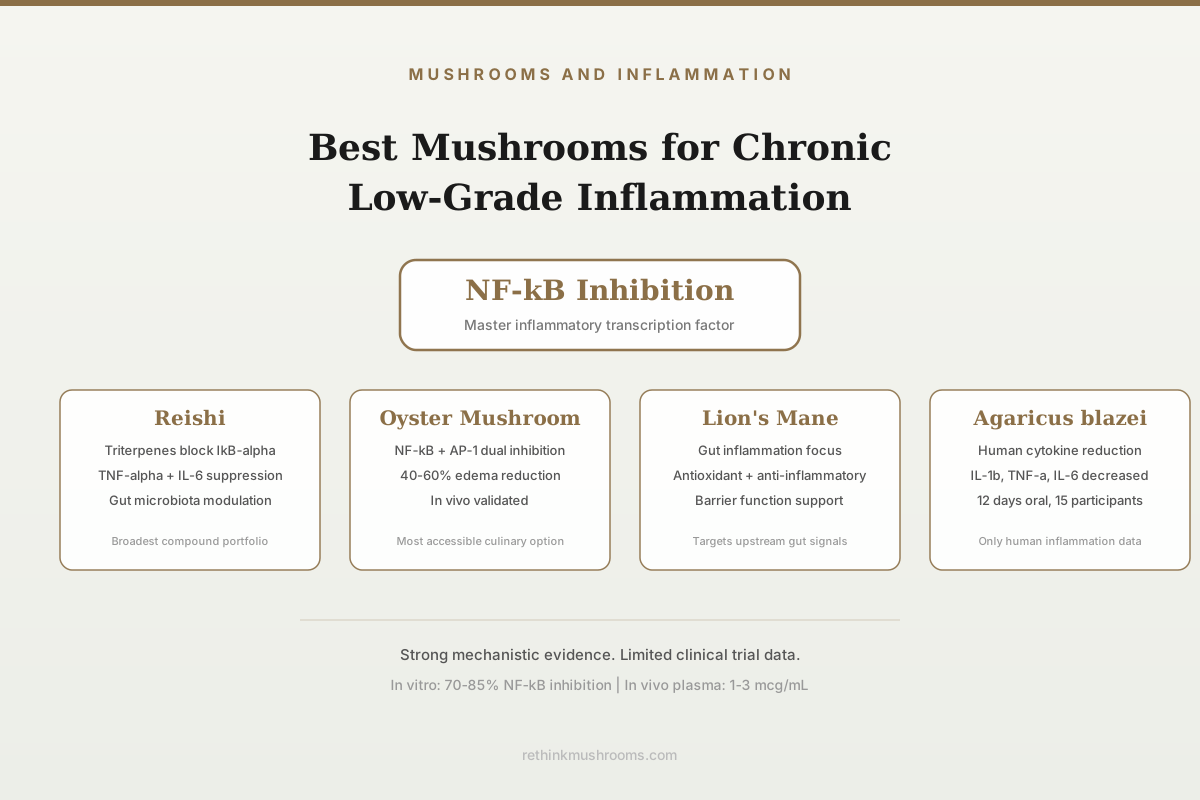
Multiple mushroom species suppress NF-kB, the master inflammatory transcription factor, through distinct bioactive compounds: triterpenes in reishi, polysaccharides in oyster mushroom, and erinacines in lion's mane.
Dudhgaonkar et al., Int. Immunopharmacol., 2009
TNF-alpha
and IL-6 suppressed by reishi triterpenes
In Vivo
oyster mushroom reduced inflammation in mice
6 Species
with anti-inflammatory evidence
Dudhgaonkar et al., Int. Immunopharmacol., 2009
 View as image ↗
Chronic low-grade inflammation is the sustained, subclinical elevation of inflammatory markers (C-reactive protein, IL-6, TNF-alpha) that drives metabolic disease, cardiovascular disease, neurodegeneration, and accelerated aging. Unlike acute inflammation from infection or injury, chronic inflammation persists for months or years without resolution, often without symptoms until organ damage accumulates. Multiple mushroom species contain compounds that suppress the inflammatory transcription factor NF-kB and reduce pro-inflammatory cytokine production in laboratory and animal studies. The evidence is strong at the mechanistic level but limited at the clinical trial level: most data comes from cell culture and animal models rather than human trials measuring CRP or IL-6 reduction. For a deeper look at the clinical evidence for mushrooms reducing CRP, see the companion article. For the broader comparison of anti-inflammatory mushrooms for metabolic inflammation, see the dedicated analysis.
Key Takeaways
- Reishi (Ganoderma lucidum) triterpene extract suppressed TNF-alpha and IL-6 secretion from LPS-stimulated macrophages by inhibiting NF-kB activation through blockade of IkB-alpha phosphorylation and p65 nuclear translocation (Dudhgaonkar et al., 2009)
- Oyster mushroom (Pleurotus ostreatus) concentrate reduced edema by 40-60% in a carrageenan-induced paw inflammation mouse model and inhibited both NF-kB and AP-1 signaling in macrophage cells (Jedinak et al., 2011)
- Lion's mane ethanol extract reduced colitis severity in DSS-treated mice, decreasing TNF-alpha, IL-6, and iNOS expression in colon tissue (Qin et al., 2016)
- Lion's mane polysaccharide attenuated colitis in mice by restoring SOD and CAT antioxidant enzyme activity while reducing malondialdehyde and myeloperoxidase inflammatory markers (Ren et al., 2018)
- Agaricus blazei aqueous extract reduced proinflammatory cytokines (IL-1beta, TNF-alpha, IL-6, IL-2, IL-7) in healthy humans after 12 days of oral administration at 60 mL/day (Hetland et al., 2011)
- Ganoderma lucidum polysaccharide modulated gut microbiota composition and immune cell function to inhibit inflammation and tumorigenesis in mouse models (Guo et al., 2021)
Reishi: The NF-kB Inhibitor
Reishi (Ganoderma lucidum) has the most characterized anti-inflammatory mechanism among medicinal mushrooms, centered on its triterpene compounds (ganoderic acids and related lanostane triterpenoids).
Dudhgaonkar et al. (2009) isolated the triterpene extract from reishi and tested it against LPS-stimulated RAW264.7 macrophages, the standard cell model for inflammatory pathway research.[1]
The triterpene extract markedly suppressed TNF-alpha and IL-6 secretion, the two cytokines most associated with chronic low-grade inflammation. It also inhibited nitric oxide (NO) production and prostaglandin E2 (PGE2) synthesis, the inflammatory mediators produced by iNOS and COX-2 enzymes respectively.
The mechanism was specific: reishi triterpenes blocked the phosphorylation of IkB-alpha, the inhibitory protein that normally sequesters NF-kB in the cytoplasm. When IkB-alpha phosphorylation is blocked, NF-kB cannot translocate to the nucleus and cannot activate its target inflammatory genes. This represents upstream inhibition of the inflammatory cascade rather than downstream symptom suppression.[1]
Guo et al. (2021) added a gut-immune dimension. Ganoderma lucidum polysaccharide (GLP) modulated gut microbiota composition and immune cell function to inhibit inflammation and tumorigenesis in mouse models.[2] This finding connects reishi's anti-inflammatory effects to the gut microbiome, an increasingly recognized driver of systemic inflammation. GLP increased beneficial bacterial populations (Lactobacillus, Bifidobacterium) while reducing inflammation-associated species, suggesting that part of reishi's anti-inflammatory effect operates through gut microbiota remodeling rather than direct cytokine inhibition.
The translational gap is real: reishi achieves 70-85% NF-kB inhibition in vitro at concentrations of 50-100 microg/mL, but oral administration achieves only 1-3 microg/mL plasma concentrations. This explains why the clinical anti-inflammatory effects of reishi are modest compared to its dramatic in vitro potency. The gut microbiome pathway may partially bypass this bioavailability limitation, since polysaccharides act directly in the intestinal lumen without needing systemic absorption.
Oyster Mushroom: The In Vivo Evidence
Jedinak et al. (2011) provided the strongest combined in vitro and in vivo evidence for any single mushroom species in an inflammation context.[3]
In RAW264.7 macrophages, oyster mushroom (Pleurotus ostreatus) concentrate inhibited the production of NO, TNF-alpha, and IL-6 in a dose-dependent manner. The molecular mechanism involved inhibition of both NF-kB and AP-1 signaling pathways. AP-1 is a second major inflammatory transcription factor that operates through a parallel pathway to NF-kB, and dual inhibition of both pathways provides broader anti-inflammatory coverage than targeting either alone.
The in vivo data was equally compelling. In a carrageenan-induced paw inflammation mouse model (the standard acute inflammation assay), oyster mushroom concentrate reduced edema by 40-60% compared to untreated controls. This reduction is comparable to non-steroidal anti-inflammatory drugs in the same model.[3]
The oyster mushroom finding is practical because Pleurotus ostreatus is one of the most widely cultivated and affordable edible mushrooms worldwide. Unlike reishi or lion's mane supplements, oyster mushrooms are a standard culinary ingredient available in most grocery stores, making dietary incorporation straightforward.
Lion's Mane: Gut Inflammation
Lion's mane (Hericium erinaceus) has anti-inflammatory evidence focused on gastrointestinal inflammation, which is mechanistically relevant to chronic systemic inflammation because gut barrier dysfunction and intestinal inflammation are upstream drivers of systemic inflammatory marker elevation.
Qin et al. (2016) tested lion's mane ethanol extract in a DSS-induced colitis model in mice.[4] Oral administration reduced colitis severity, with decreased expression of TNF-alpha, IL-6, and iNOS in colon tissue. Disease activity scores (weight loss, stool consistency, rectal bleeding) improved with lion's mane treatment.
Ren et al. (2018) provided deeper mechanistic detail using lion's mane polysaccharide in the same colitis model.[5] The polysaccharide attenuated colitis through a dual mechanism: it restored antioxidant enzyme activity (superoxide dismutase and catalase) while simultaneously reducing inflammatory markers (malondialdehyde and myeloperoxidase). The oxidative stress reduction preceded and enabled the anti-inflammatory effect, consistent with the understanding that oxidative stress activates NF-kB and perpetuates the inflammatory cycle.
The gut-specific evidence for lion's mane is relevant to chronic low-grade inflammation because intestinal permeability ("leaky gut") allows bacterial endotoxin to enter systemic circulation, triggering liver and adipose tissue inflammation that elevates circulating CRP and IL-6. By reducing gut inflammation and potentially improving barrier function, lion's mane may reduce the upstream source of systemic inflammatory signals. For cross-cluster context on how mushrooms help with inflammatory bowel disease, see the dedicated article.
Agaricus blazei: The Human Cytokine Data
Hetland et al. (2011) reported one of the few human studies measuring inflammatory cytokine changes after mushroom administration.[6]
In a study of 15 healthy individuals, daily oral intake of 60 mL of AndoSan (an aqueous extract containing primarily Agaricus blazei with smaller amounts of Hericium erinaceus and Grifola frondosa) for 12 days produced measurable reductions in circulating proinflammatory cytokines. IL-1beta, TNF-alpha, IL-6, IL-2, and IL-7 all decreased from baseline.
This study is limited by its small size, short duration, and absence of a placebo control group. The cytokine reductions were modest and in healthy individuals with presumably normal baseline inflammation. Whether the same effect occurs in individuals with elevated chronic inflammatory markers (the population for whom anti-inflammatory intervention is most relevant) has not been tested with this extract.
The Agaricus blazei extract modulates inflammation through its high beta-glucan content, which activates pattern recognition receptors (Dectin-1, TLR2) on immune cells. This activation can paradoxically reduce inflammation: initial immune activation triggers anti-inflammatory feedback mechanisms including IL-10 production and regulatory T cell induction, which suppress excessive inflammatory responses. This "trained immunity" concept explains how immune-stimulating mushroom polysaccharides can simultaneously enhance pathogen defense and reduce chronic inflammation.
Cross-Species Comparison
The anti-inflammatory evidence across species converges on shared and distinct mechanisms:
Shared mechanism: Beta-glucan polysaccharides from all species activate pattern recognition receptors and modulate NF-kB signaling. This is the baseline anti-inflammatory activity common to medicinal mushrooms.
Reishi-specific: Triterpenes (ganoderic acids) provide direct NF-kB inhibition independent of polysaccharide-receptor interactions. This dual mechanism (polysaccharide + triterpene) gives reishi the broadest anti-inflammatory compound portfolio.
Oyster mushroom-specific: Dual NF-kB and AP-1 inhibition provides broader transcription factor coverage. The in vivo edema reduction data (40-60%) is among the strongest for any mushroom in an acute inflammation model.
Lion's mane-specific: Gut-focused anti-inflammatory effects through both ethanol-soluble compounds and polysaccharides. The combined antioxidant restoration and anti-inflammatory activity addresses the oxidative stress-inflammation cycle that perpetuates chronic inflammation.
Agaricus blazei-specific: The only species with published human cytokine reduction data from oral administration, albeit in a small, uncontrolled study.
For chronic low-grade inflammation, the strongest evidence-based approach combines dietary inclusion of anti-inflammatory mushrooms (oyster mushroom is the most practical culinary choice) with targeted supplementation of reishi for its triterpene-mediated NF-kB inhibition. For the cross-species research summary, see the article on mushrooms for chronic inflammation. For the specific question of whether mushrooms can lower C-reactive protein, see the CRP-focused analysis.
The Bottom Line
Multiple mushroom species suppress chronic inflammatory pathways through distinct but complementary mechanisms. Reishi triterpenes inhibit NF-kB activation by blocking IkB-alpha phosphorylation, directly reducing TNF-alpha and IL-6 production. Oyster mushroom inhibits both NF-kB and AP-1 pathways and reduced inflammation by 40-60% in an in vivo mouse model. Lion's mane targets gut inflammation through combined antioxidant and anti-inflammatory mechanisms. Agaricus blazei is the only species with human data showing oral cytokine reduction. The primary limitation across all species is the gap between potent in vitro NF-kB inhibition and modest clinical effects due to limited oral bioavailability of the active compounds.
Frequently Asked Questions
Sources & References
- 1RTHM-00152·Dudhgaonkar, Shailesh et al. (2009). “Suppression of the inflammatory response by triterpenes isolated from the mushroom Ganoderma lucidum..” International immunopharmacology.Study breakdown →PubMed →↩
- 2RTHM-00690·Guo, Cuiling et al. (2021). “Ganoderma lucidum polysaccharide modulates gut microbiota and immune cell function to inhibit inflammation and tumorigenesis in colon..” Carbohydrate polymers.Study breakdown →PubMed →↩
- 3RTHM-00219·Jedinak, Andrej et al. (2011). “Anti-inflammatory activity of edible oyster mushroom is mediated through the inhibition of NF-κB and AP-1 signaling..” Nutrition journal.Study breakdown →PubMed →↩
- 4RTHM-00442·Qin, Mingming et al. (2016). “Anti-Inflammatory Effects of Ethanol Extract of Lion's Mane Medicinal Mushroom, Hericium erinaceus (Agaricomycetes), in Mice with Ulcerative Colitis..” International journal of medicinal mushrooms.Study breakdown →PubMed →↩
- 5RTHM-00529·Ren, Yilin et al. (2018). “Polysaccharide of Hericium erinaceus attenuates colitis in C57BL/6 mice via regulation of oxidative stress, inflammation-related signaling pathways and modulating the composition of the gut microbiota..” The Journal of nutritional biochemistry.Study breakdown →PubMed →↩
- 6RTHM-00215·Hetland, Geir et al. (2011). “The Mushroom Agaricus blazei Murill Elicits Medicinal Effects on Tumor, Infection, Allergy, and Inflammation through Its Modulation of Innate Immunity and Amelioration of Th1/Th2 Imbalance and Inflammation..” Advances in pharmacological sciences.Study breakdown →PubMed →↩