Turkey Tail & the Gut Microbiome
Explore mushroom research and guides on turkey tail & the gut microbiome.
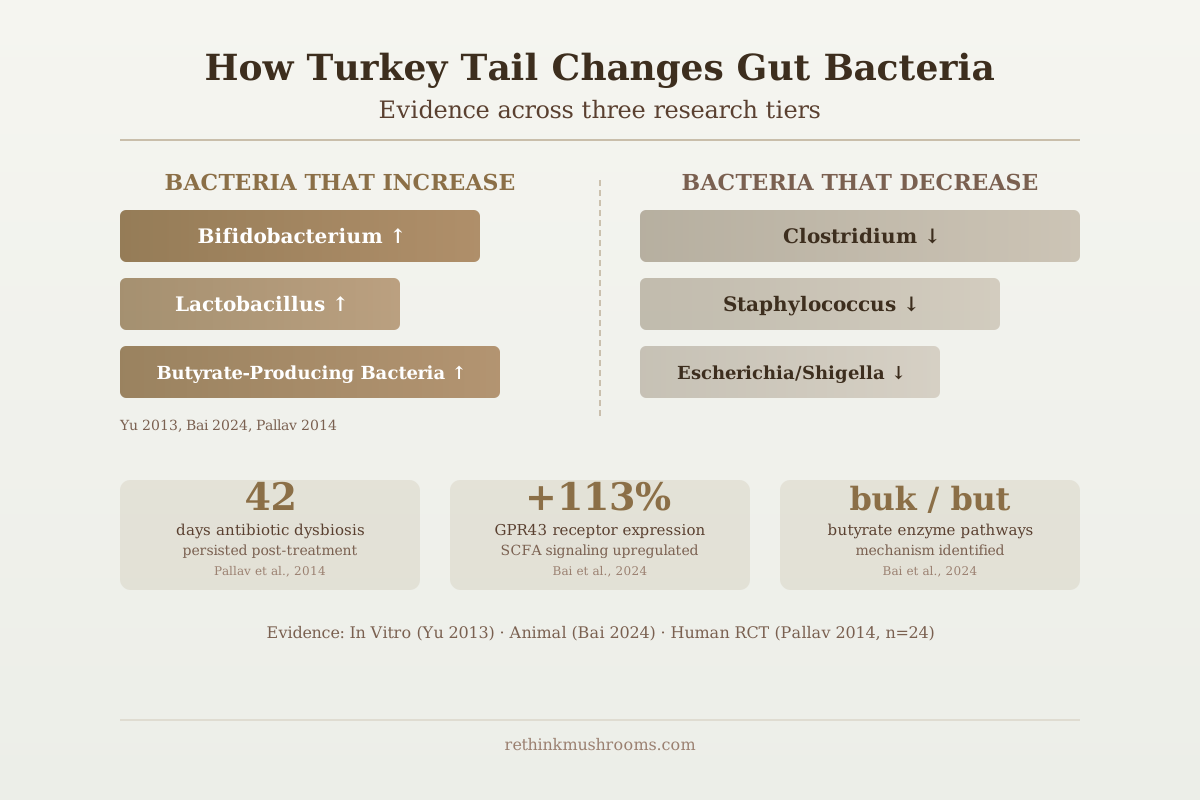
How Turkey Tail Changes Gut Bacteria Composition
Turkey tail changes gut bacteria: Bifidobacterium and Lactobacillus increase, Clostridium and Staphylococcus decrease. What three research tiers show.
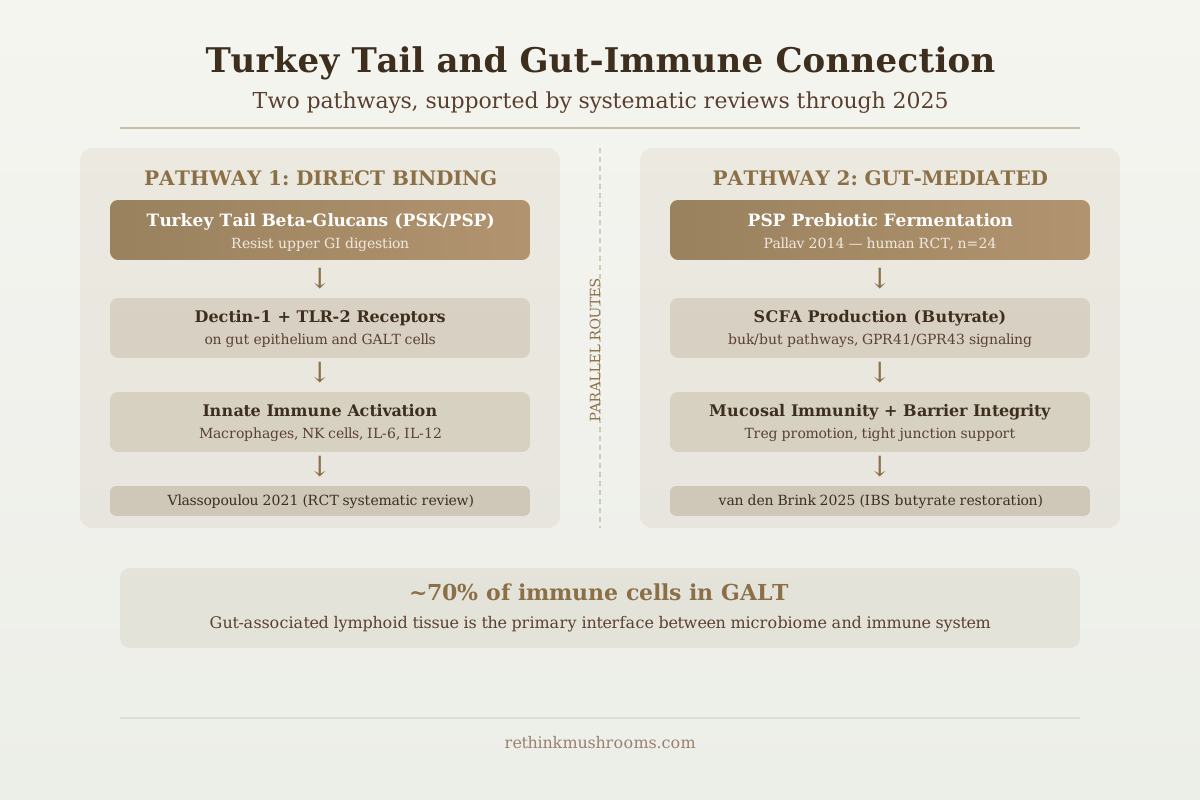
Turkey Tail and Gut-Immune Connection: Research Review
Turkey tail's gut-immune connection runs through GALT, dectin-1 receptors, and SCFA signaling. Here's what the systematic reviews and 2025 research show.
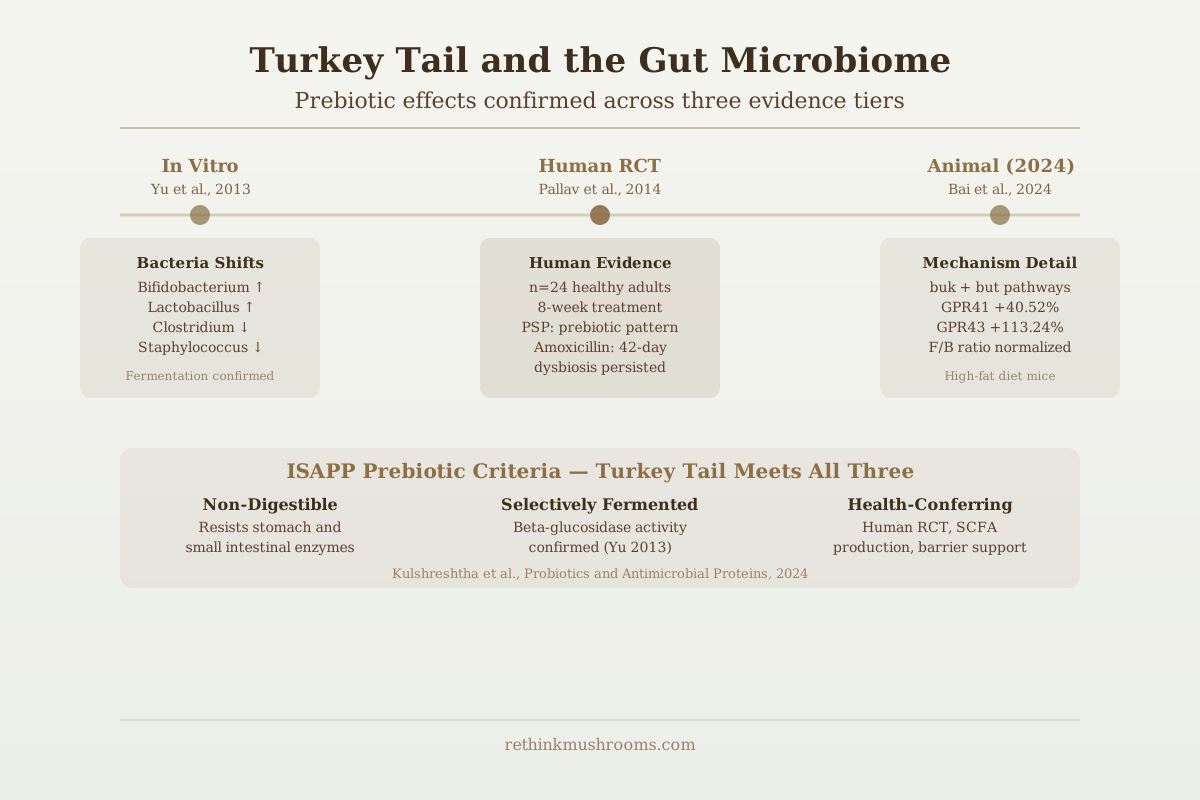
Turkey Tail and the Gut Microbiome: Prebiotic Effects
Turkey tail gut microbiome research shows PSP acts as a prebiotic, shifting Bifidobacterium up and SCFA production higher. What the 2014 human RCT and 2024 data show.
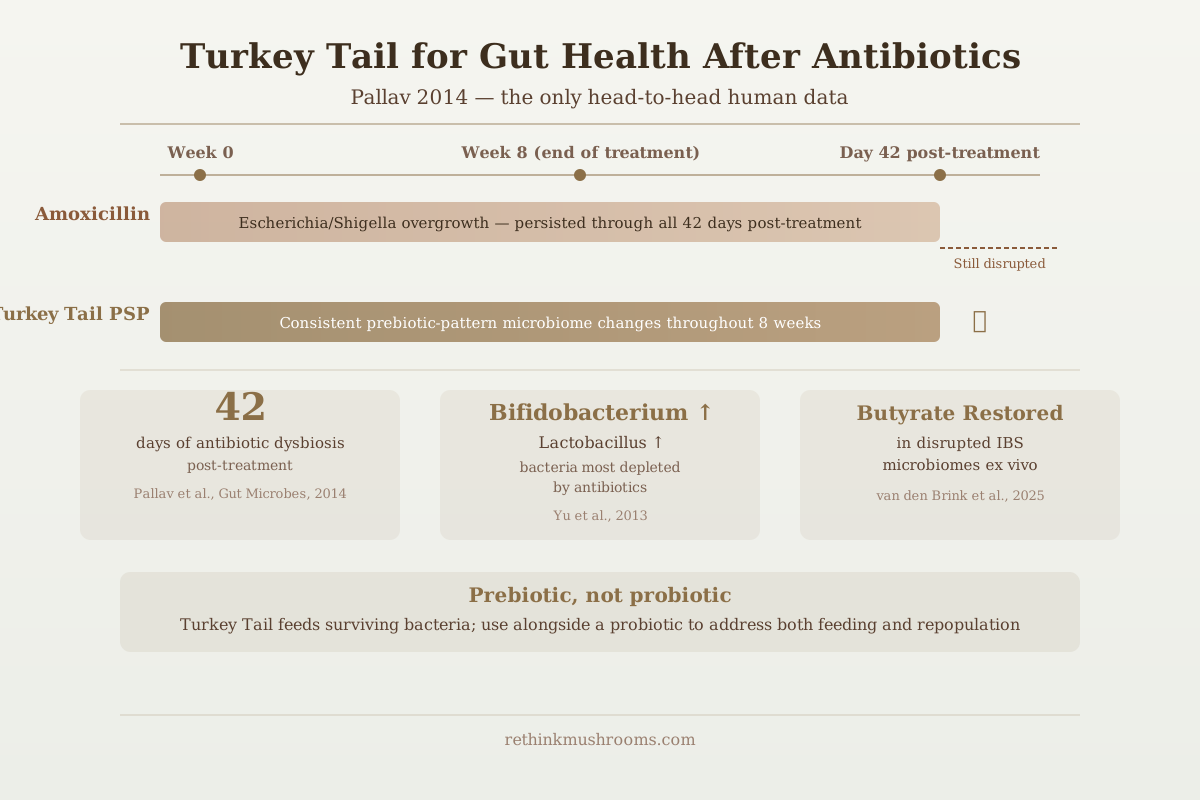
Turkey Tail for Gut Health After Antibiotics
Turkey tail after antibiotics: one human RCT found amoxicillin caused 42-day microbiome disruption while Turkey Tail's PSP caused prebiotic shifts. What the research shows.
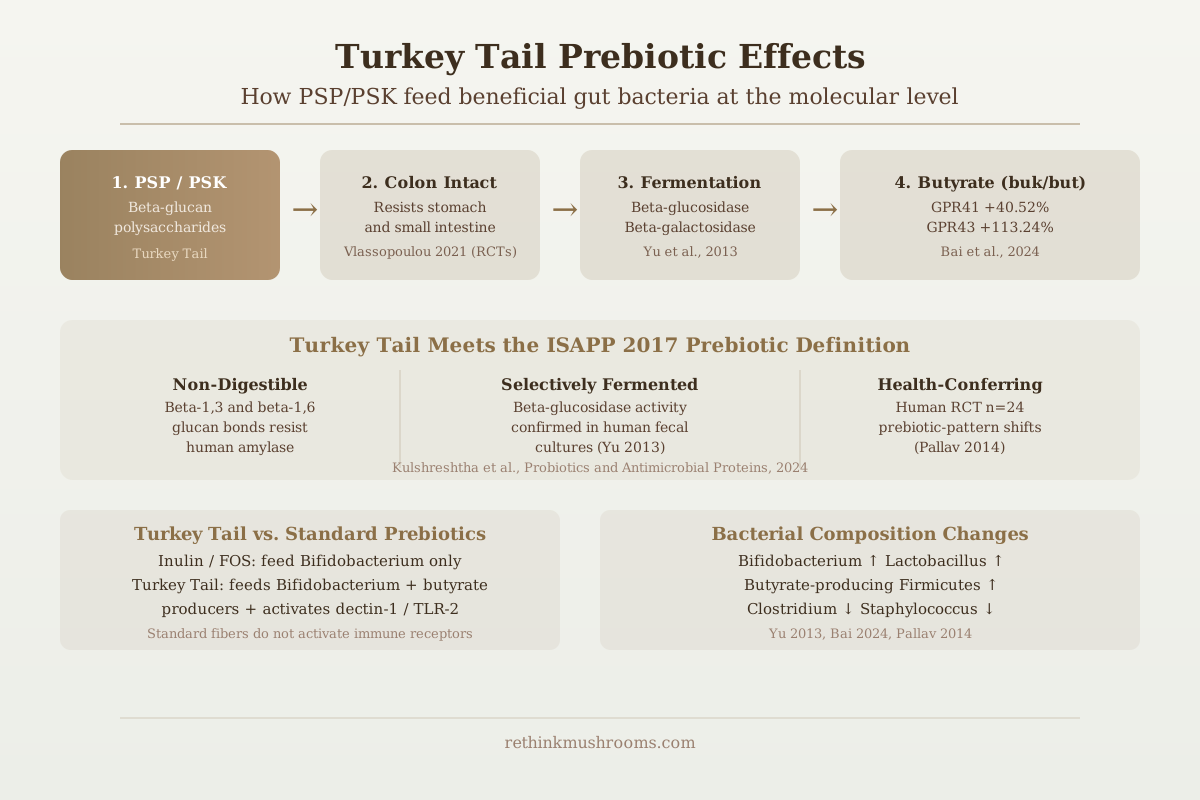
Turkey Tail Prebiotic Effects: Feeding Beneficial Gut Bacteria
Turkey tail is a prebiotic: PSP/PSK resist digestion, selectively feed Bifidobacterium and butyrate-producing bacteria, and meet the 2017 ISAPP definition.