Mushrooms & Cardiovascular Health
5 mechanisms
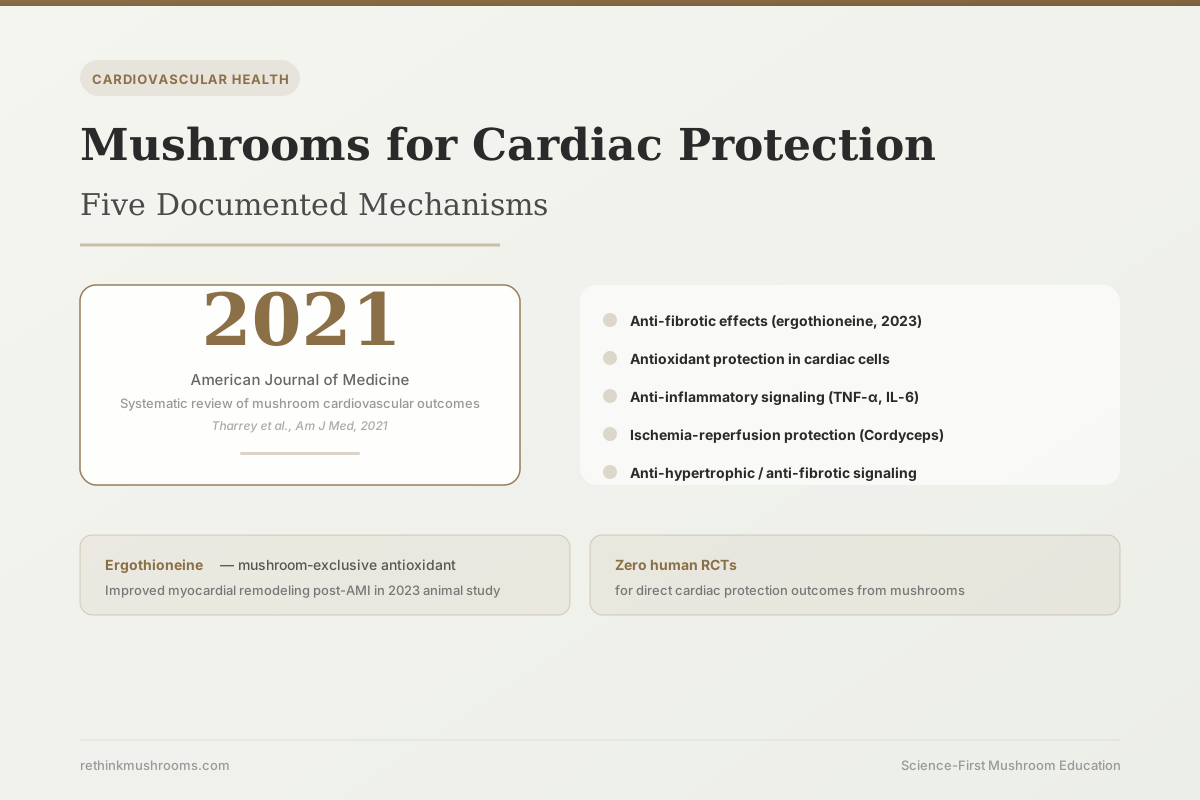
A 2021 systematic review in the American Journal of Medicine catalogued how mushrooms protect the heart through both direct and indirect pathways, a distinction almost no consumer article makes.
Tharrey et al., American Journal of Medicine, 2021
AmJMed 2021
highest-authority systematic review of mushroom cardiovascular outcomes
Ergothioneine
mushroom-exclusive antioxidant that improved cardiac remodeling post-AMI in 2023 animal study
Zero
human RCTs for direct cardiac protection from mushrooms specifically
Tharrey et al., American Journal of Medicine, 2021
 View as image ↗
The popular framing of mushrooms as "good for the heart" is accurate but imprecise. Most consumer articles describe the same handful of effects: mushrooms can lower cholesterol, reduce blood pressure, and thin the blood slightly. These are real effects, and they protect the heart indirectly. But a 2021 systematic review published in the American Journal of Medicine documented something the wellness literature largely ignores: a second category of mushroom effects that act directly on cardiac tissue, including antioxidant protection in the heart muscle itself, anti-fibrotic activity, and ischemia-reperfusion protection after cardiac events.[1]
This article maps both categories. The distinction matters because the evidence behind them is different. The indirect benefits, specifically cholesterol reduction, blood pressure, and antiplatelet activity, have more clinical data. The direct cardiac protection findings come mostly from animal models and need to be read with that clearly in mind. The full picture of how mushrooms support cardiovascular health through cholesterol pathways is covered in mushrooms that lower cholesterol: the research.
Key Takeaways
- A 2021 systematic review in the American Journal of Medicine (Tharrey et al.) distinguished direct cardiac protection mechanisms from indirect benefits, finding evidence for both, with direct data coming mostly from animal models.
- Ergothioneine, a sulfur-containing antioxidant found almost exclusively in mushrooms, improved myocardial remodeling and preserved cardiac function after acute myocardial infarction in a 2023 animal study (Beelman et al., Food Chemistry).
- Mushroom beta-glucans show antioxidant and anti-inflammatory effects in cardiac tissue beyond their cholesterol-lowering role, documented in a 2018 review by Angeloni et al. in the International Journal of Molecular Sciences.
- A 2024 comprehensive review documented Cordyceps compounds protecting cardiac and cerebrovascular tissue during ischemia-reperfusion injury, the damage that occurs when blood supply is cut off and then restored during a cardiac event.
- The metabolic syndrome overlap is significant: mushrooms reduce chronic low-grade inflammation, insulin resistance, and lipid imbalances upstream of heart disease (Capasso et al., 2020).
- No human randomized controlled trial has tested mushrooms specifically for direct cardiac protection outcomes such as fibrosis reduction, cardiac hypertrophy inhibition, or ischemia-reperfusion protection.
Why "Good for the Heart" Misses the Point: Direct vs. Indirect Cardiac Protection
Most of what gets labeled "heart healthy" in mushroom content describes the same indirect pathway: mushrooms lower LDL cholesterol, which reduces arterial plaque buildup, which reduces heart attack risk over decades. This is real and important. But it is not the only way mushroom compounds interact with the cardiovascular system.
The Tharrey and colleagues 2021 systematic review in the American Journal of Medicine, covering mushroom consumption and cardiovascular health outcomes, documented two distinct categories of cardiac benefit.[1]
The indirect category includes effects on cholesterol, blood pressure, blood thinning, and blood sugar, all of which reduce cardiovascular disease risk factors over time. These effects have substantial clinical data, including some randomized trial evidence for the cholesterol and blood pressure outcomes.
The direct category includes effects that act on the heart muscle and cardiac tissue themselves: antioxidant protection at the cellular level in heart muscle cells, anti-inflammatory signaling that reduces damage from pro-inflammatory proteins, anti-fibrotic effects that limit scar tissue formation after cardiac injury, and ischemia-reperfusion protection, meaning the reduction of damage when blood supply to the heart is cut off and then restored.
This distinction changes how you interpret the research. The indirect benefits have clinical trial support in humans. The direct cardiac protection data mostly comes from animal models and cell studies. Both categories are worth understanding, but they represent different levels of certainty and different practical relevance: someone managing long-term heart health and someone who just had a cardiac event would find different parts of this evidence base most useful.
Five Ways Mushroom Compounds Protect the Heart
The research documents at least five distinct pathways through which mushroom compounds affect cardiac health. This is the part that consumer content almost never presents clearly or completely.
-
Anti-fibrotic effects: Mushroom-derived ergothioneine reduced markers of myocardial fibrosis, the formation of stiff scar tissue in the heart muscle, in an animal model after acute myocardial infarction (Beelman et al., 2023).[4]
-
Antioxidant protection in cardiac cells: Beta-glucans and ergothioneine reduce oxidative stress in cardiac tissue, helping heart muscle cells resist damage from the reactive oxygen species produced during cardiac stress (Angeloni et al., 2018; Beelman et al., 2023).[2][4]
-
Anti-inflammatory signaling in the heart: Multiple mushroom compounds reduce the production of inflammatory proteins, including TNF-α and IL-6, that damage cardiac tissue and accelerate heart disease progression when chronically elevated (Tharrey et al., 2021; Capasso et al., 2020).[1][3]
-
Ischemia-reperfusion protection: A 2024 comprehensive review documented Cordyceps compounds reducing tissue damage during and after the blood supply disruption that occurs in heart attacks (2024 Phytomedicine review).[5]
-
Anti-hypertrophic and anti-fibrotic signaling: Animal models show mushroom polysaccharides inhibiting pathological enlargement of the heart muscle and the progressive scar tissue formation that leads to heart failure. This mechanism is covered in depth in mushroom polysaccharides and cardiac remodeling after injury and reishi and heart failure: cardioprotective research in animal models.
The Structural Polysaccharide Route: How Beta-Glucans Affect Cardiac Tissue
Beta-glucans, the main fiber component in mushroom cell walls, are well known for their cholesterol-lowering effects through a bile acid mechanism: they bind to bile acids in the gut, forcing the liver to convert more cholesterol to replace them, which lowers serum LDL.
But the 2018 review by Angeloni and colleagues in the International Journal of Molecular Sciences documented additional beta-glucan effects on cardiovascular tissue that go beyond the cholesterol pathway.[2] Beta-glucans also function as antioxidants in cardiac cells, reducing the oxidative damage that accumulates during chronic cardiovascular stress. They modulate inflammatory signaling pathways that drive both arterial plaque instability and cardiac tissue damage. These are direct effects on the biology of heart and vascular tissue, not just downstream results of a lower LDL number.
Capasso and colleagues, in a 2020 review, situated these findings within the metabolic syndrome context.[3] Metabolic syndrome is the cluster of conditions including obesity, insulin resistance, high blood pressure, and high triglycerides that dramatically increases cardiovascular risk. Mushroom bioactive compounds appear to address several of the upstream drivers of metabolic syndrome at once: they reduce chronic low-grade inflammation, improve insulin sensitivity, and modulate lipid metabolism. The cardiac protection from this upstream effect compounds over time.
The clinical significance: people with metabolic syndrome carry substantially elevated risk for myocardial infarction and heart failure. If mushroom compounds can reduce the metabolic burden driving that risk, the protective effect would operate through multiple simultaneous pathways rather than a single mechanism.
Ergothioneine After a Heart Attack: What the 2023 Animal Study Found
Of all the cardiac protection findings in the mushroom research literature, the ergothioneine data is the most specific. It is also the least likely to appear in any consumer health content.
Ergothioneine is a sulfur-containing amino acid with potent antioxidant properties. It is found in meaningful quantities in almost no common food other than mushrooms. Grains and legumes contain trace amounts. Dietary mushroom consumption is the primary source of ergothioneine for most people who get it at all. This makes ergothioneine a mechanistically interesting compound for the "why mushrooms specifically" question in cardiovascular protection.
Beelman and colleagues, writing in Food Chemistry in 2023, tested ergothioneine in an animal model of acute myocardial infarction (AMI). AMI, the event most people call a heart attack, causes both immediate cell death in the heart muscle and a subsequent remodeling process in which surviving tissue attempts to compensate for what was lost. This remodeling often goes wrong: the heart enlarges in unhealthy ways, scar tissue called fibrosis replaces functional muscle, and cardiac output declines progressively in the months after the initial event.[4]
In the animal model, ergothioneine improved this remodeling process. It reduced myocardial fibrosis, the accumulation of that damaging scar tissue. It preserved cardiac function in the period after the infarction. The heart did not recover perfectly, but it recovered measurably better than the control animals.
This is animal model data from a single study. It does not mean ergothioneine supplementation prevents heart attacks or guarantees better outcomes after one in humans. Human trials testing ergothioneine specifically for cardiac remodeling outcomes have not been published. The mechanistic specificity of this finding is what makes it the most direct evidence available for any mushroom compound and cardiac protection: a specific mushroom compound, a specific post-AMI mechanism, a measurable cardiac function outcome. For the full picture of ergothioneine's cardiovascular research, see ergothioneine and cardiovascular disease.
Ischemia-Reperfusion: What the 2024 Cordyceps Review Documented
Ischemia-reperfusion injury follows a specific pattern. When the blood supply to the heart is blocked during a cardiac event, the tissue starved of oxygen begins to die. That is ischemic injury. When blood flow is restored through surgery, stenting, or medication, a second wave of damage occurs as the sudden return of oxygenated blood generates reactive oxygen species and triggers a rapid inflammatory response. This reperfusion injury can be as damaging as the original blockage.
A 2024 comprehensive review in Phytomedicine documented how Cordyceps compounds address both phases of this injury pattern.[5] The review covered the full scope of Cordyceps research in ischemic cardiovascular and cerebrovascular contexts. Cordyceps bioactive compounds, including cordycepin and Cordyceps polysaccharides, have been shown in animal models to reduce ischemia-related cardiac damage through antioxidant, anti-inflammatory, and anti-apoptotic mechanisms. Anti-apoptotic means preventing the programmed cell death that oxygen deprivation induces in heart muscle cells. The review also documented modulation of the inflammatory cascade that drives reperfusion injury specifically.
This is preclinical data from a review of animal model research. No large human trial has tested Cordyceps specifically for ischemia-reperfusion cardiac outcomes. But the 2024 review provides a comprehensive mechanistic picture of why this protective signal keeps appearing in Cordyceps research across multiple labs and model types. For the deep dive on this specific topic, see Cordyceps and myocardial ischemia: protecting the heart under stress.
What Clinical Evidence Exists and What Is Still Missing
The five mechanisms described above are not equally supported by clinical evidence, and this is worth stating directly.
The Tharrey 2021 systematic review is explicit about the evidence hierarchy.[1] The best-supported cardiovascular evidence from mushroom consumption comes from observational studies and some randomized trials, almost all for indirect effects. LDL cholesterol reduction from beta-glucan has the most robust clinical support across multiple trials. Blood pressure effects have clinical data but smaller and more variable effect sizes. For the ACE inhibition and vasodilation research specifically, see reishi and hypertension. Antiplatelet and anticoagulant effects have laboratory and animal evidence; for the specific compounds and mechanisms involved, see mushroom antiplatelet compounds: how fungi prevent dangerous clots.
The direct cardiac protection mechanisms, including anti-fibrotic, anti-hypertrophic, and ischemia-reperfusion effects, have animal model evidence and mechanistic plausibility, but the human trial data to confirm them has not been published. One controlled human intervention trial tested Ganoderma lucidum for cardiac biomarkers including blood pressure and cholesterol (Cheung et al., 2012), but was not designed to measure fibrosis, hypertrophy, or ischemia-reperfusion outcomes. That trial is discussed in reishi and heart failure.
The research from Taiwan on Antrodia camphorata adds another regional line of cardiac protection evidence, covered in Antrodia camphorata and heart protection.
The honest framing: the indirect cardiovascular benefits have clinical support and represent the more established claim from the current evidence. The direct cardiac protection mechanisms are compelling and appear consistently across different species and research groups, but they are biology that human trials have not yet confirmed in people.
The Bottom Line
Five cardiac protection mechanisms have been documented in mushroom research: anti-fibrotic and antioxidant effects from ergothioneine, antioxidant and anti-inflammatory effects in cardiac tissue from beta-glucans, ischemia-reperfusion protection from Cordyceps compounds, anti-hypertrophic signaling, and upstream metabolic syndrome modulation. The clinical evidence is strongest for the indirect benefits, specifically cholesterol reduction and blood pressure effects, which have some randomized trial support. The direct cardiac protection data is mechanistically specific and consistent across animal models, but no human trial has tested mushrooms for cardiac remodeling, ischemia protection, or fibrosis outcomes.
Frequently Asked Questions
Sources & References
- 1. Source details for this reference are not yet available.
- 2. Source details for this reference are not yet available.
- 3. Source details for this reference are not yet available.
- 4. Source details for this reference are not yet available.
- 5. Source details for this reference are not yet available.