Oyster Mushroom & Blood Sugar
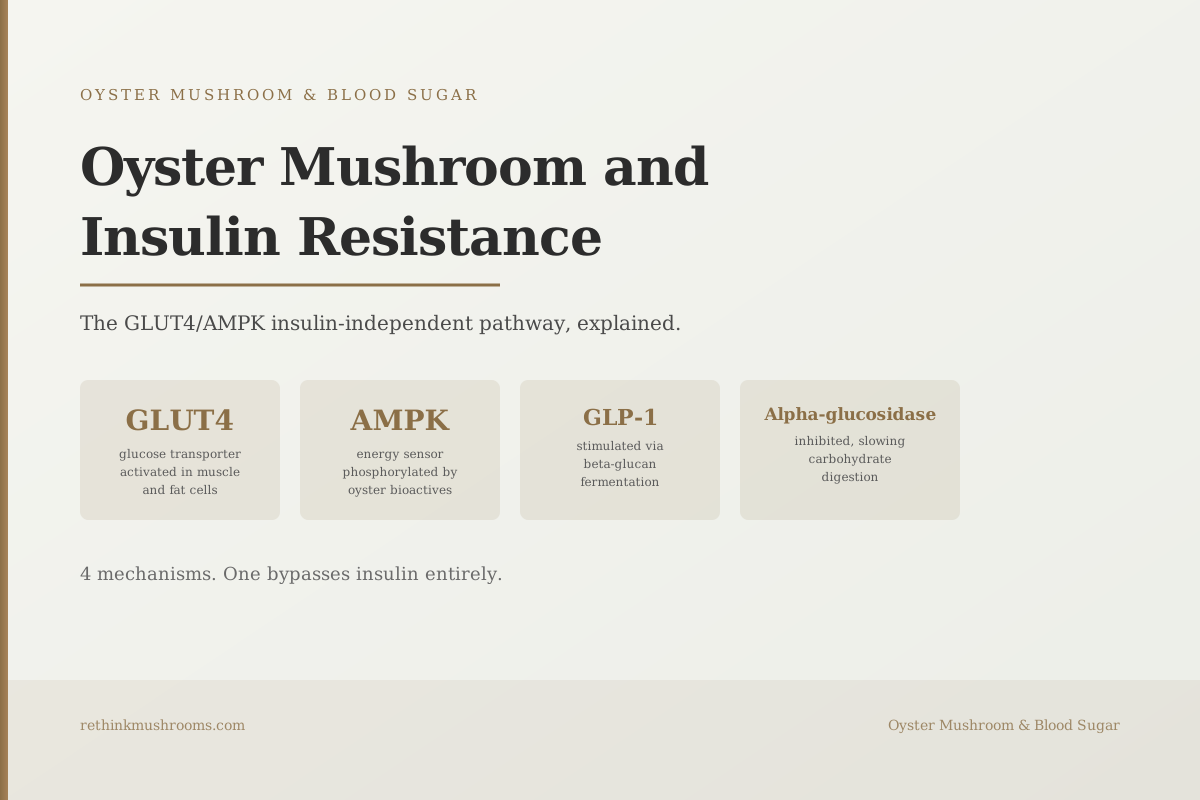
4 proposed mechanisms targeting insulin resistance
One is designed to bypass insulin entirely: in diabetic rats, oyster mushroom powder increased phosphorylation of AMPK, the cell's energy sensor, alongside higher GLUT4 transporter expression in muscle and fat. Whether that pathway operates in humans has not been tested.
Asrafuzzaman et al., Journal of Taibah University Medical Sciences, 2018
GLUT4
mRNA expression up in both muscle and adipose tissue of diabetic rats
+17%
GLP-1 response after an oyster-mushroom-fortified meal in adults with impaired glucose tolerance
8 trials
reviewed in humans, with benefits reported but the evidence graded low
Asrafuzzaman et al., Journal of Taibah University Medical Sciences, 2018
 View as image ↗
Most approaches to lowering blood sugar work with insulin rather than around it: slowing glucose absorption so less insulin is needed at once, or stimulating the pancreas to release more. Insulin resistance, the condition in which cells stop responding normally to insulin's signal, complicates all of them, because the core problem is insulin signaling itself.
What makes the oyster mushroom literature unusual is that one of its proposed mechanisms does not run through insulin at all. In a 2018 animal study, oyster mushroom powder increased activation of a protein called AMPK in muscle and fat tissue, alongside increased expression of the gene for GLUT4, the transporter that carries glucose into cells.[1] In principle, that route remains open even when insulin signaling is impaired.
The honest framing matters here, because this is where a lot of writing about mushrooms and blood sugar goes wrong. The mechanistic work is preclinical. The human trials that exist test a different question and return a more complicated answer. This article walks through both: what GLUT4 and AMPK actually do, how beta-glucan separately slows glucose absorption and stimulates a satiety hormone, what the polysaccharide research adds, and what happened when researchers finally put oyster mushroom in front of human participants. For the overview of oyster mushroom's place in the broader fungal world, see what is oyster mushroom: the world's second most popular mushroom.
Key Takeaways
- Asrafuzzaman et al. (2018) found that oyster mushroom powder lowered serum glucose in STZ-induced diabetic rats, with increased AMPK phosphorylation and increased GLUT4 mRNA expression in both muscle and adipose tissue, a route that does not require intact insulin signaling
- Four mechanisms are proposed across the literature: alpha-glucosidase inhibition, GLUT4/AMPK activation, GLP-1 stimulation, and gut microbiome modulation with bile acid effects
- The mechanisms are not equally supported. GLP-1 stimulation is the only one directly confirmed in a human trial; the GLUT4/AMPK pathway has never been measured in humans
- In a randomized crossover trial of 22 adults with impaired glucose tolerance, an oyster-mushroom-fortified meal raised GLP-1 by 17% and lowered hunger by 22%, but postprandial glucose, insulin, and triglycerides did not differ from the control meal
- A 2020 systematic review of eight clinical trials reported beneficial glucose and lipid effects, but rated risk of bias high or unclear in most studies and graded the overall evidence as low
- Nothing here is a substitute for prescribed diabetes treatment, and people on glucose-lowering medication should involve their clinician before adding mushroom powder
What Insulin Resistance Is (and Why an Insulin-Independent Pathway Matters)
Insulin resistance is the condition where cells stop responding normally to insulin's signal to take up glucose from the blood. The pancreas compensates by producing more insulin. For a while, this works. Eventually the pancreas cannot keep up, blood sugar remains elevated, and type 2 diabetes develops.
Most blood sugar interventions, pharmaceutical and dietary alike, work by reducing the demand on insulin or increasing insulin output. Metformin reduces glucose production in the liver. Alpha-glucosidase inhibitor drugs slow carbohydrate digestion so glucose enters the blood more gradually. GLP-1 receptor agonists amplify a hormone pathway that stimulates insulin release when blood sugar rises.
All of these still depend, to varying degrees, on insulin being able to do its job at the cellular level.
The theoretical appeal of a GLUT4/AMPK mechanism is that it sidesteps that dependency. GLUT4, or glucose transporter type 4, is the protein responsible for moving glucose from the blood into muscle and fat cells. In healthy people, insulin triggers GLUT4 to relocate to the cell surface. But GLUT4 traffic can also be driven by AMPK, a protein the cell uses to sense energy status. When cellular energy runs low, AMPK activates, GLUT4 moves to the surface, and glucose enters the cell without insulin having initiated the signal.
Exercise activates AMPK. So do certain drugs, metformin among them, as a secondary mechanism. The oyster mushroom research proposes that mushroom bioactives can do something similar through diet.
This does not mean oyster mushroom replaces insulin or matches pharmaceutical interventions in advanced diabetes. It means the mushroom research has identified a biological pathway that stays available when insulin signaling is compromised, and then tested whether a mushroom can engage it in rodents.
The GLUT4/AMPK Study: The Insulin-Independent Mechanism in Detail
Asrafuzzaman and colleagues published the key study in the Journal of Taibah University Medical Sciences in 2018.[1]
They used STZ-induced diabetic Long-Evans rats, a standard model created by damaging pancreatic beta-cells with streptozotocin. These animals have severely impaired insulin production, which makes them a useful test bed for mechanisms that are supposed to work without insulin. Oyster mushroom powder was supplemented at 5% of the usual feed for eight consecutive weeks.
The results were specific enough to be mechanistically meaningful. Serum glucose fell in the mushroom-fed group. What distinguished the study was the molecular measurement: levels of phosphorylated AMPK, measured by western blot relative to beta-actin, rose in muscle and adipose tissue, and GLUT4 expression, measured relative to GAPDH, increased significantly in both tissues.
Asrafuzzaman et al. (2018) · Journal of Taibah University Medical Sciences
- Population
- STZ-induced type 2 diabetic model rats (Long-Evans)
- Intervention
- Oyster mushroom powder at 5% of feed, 8 consecutive weeks
- Comparator
- Untreated diabetic control rats
- Finding
- Serum glucose decreased. Phosphorylated AMPK increased in muscle and adipose tissue, and GLUT4 expression increased significantly in both tissues, consistent with an insulin-independent route to glucose uptake.
preliminary Rodent model with chemically destroyed beta-cells. GLUT4 was measured as mRNA expression, not as protein arriving at the cell surface, and the pathway has never been measured in humans.
Asrafuzzaman et al. (2018), Journal of Taibah University Medical Sciences [ref 1]
Two details deserve emphasis, because they are routinely overstated elsewhere.
First, muscle and adipose tissue together account for the majority of glucose disposal after a meal, so the fact that both tissues responded suggests a systemic rather than tissue-specific effect. That is a genuine strength of the study.
Second, GLUT4 was quantified as messenger RNA using cDNA-PCR. That measures how much GLUT4 the cell is transcribing, not how much transporter protein actually arrived at the cell membrane. Those usually move together, but they are not the same measurement, and the translocation step is the one that physically clears glucose from blood. Descriptions of this study that say oyster mushroom "moved GLUT4 to the cell surface" are reporting an inference, not a result.
In people with insulin resistance, the insulin-to-GLUT4 signal weakens. The AMPK route to GLUT4 stays functional. Trying to engage it through diet is a mechanistically coherent idea. It is also, so far, an untested one in humans.
For a dedicated article on the GLUT4 transporter and what the research shows, see oyster mushroom and glucose transporter activation: GLUT4 research.
Beta-Glucan's Separate Mechanisms on Blood Sugar
Beta-glucan, the primary soluble fiber in oyster mushrooms, is proposed to act through several distinct pathways, each addressing a different aspect of blood sugar regulation. A 2023 review in Molecules surveyed the anti-diabetic evidence across edible mushroom species, including Pleurotus.[2]
Alpha-glucosidase inhibition. Alpha-glucosidase is the intestinal enzyme that breaks complex carbohydrates into absorbable glucose. Mushroom compounds inhibit this enzyme, slowing the conversion of carbohydrates to glucose and, in theory, flattening the post-meal rise in blood sugar. This is the same target as the drug acarbose. The review identifies suppression of intestinal glucosidase as one of the principal routes by which mushroom-derived compounds act on type 2 diabetes.[2] Worth noting: most of this enzyme-inhibition work is in vitro, and, as the section below shows, a slowed-absorption effect large enough to move human postprandial glucose has not been demonstrated for oyster mushroom.
GLP-1 stimulation. GLP-1 (glucagon-like peptide-1) is a hormone released by cells in the small intestine and colon in response to food, particularly fiber. It signals fullness, slows gastric emptying, and stimulates the pancreas to release insulin in proportion to blood sugar. Beta-glucan, being a fermentable fiber, stimulates GLP-1 release. This is the one mechanism in this article that has been directly confirmed in humans.
Cholesterol and bile acid effects. Beta-glucan and related polysaccharides bind bile acids in the intestine and reduce their reabsorption, forcing the liver to draw on cholesterol to make new ones. In mice fed a high-fat diet, Pleurotus eryngii polysaccharides increased faecal excretion of bile acids and lipids, lowered serum total and LDL cholesterol, and raised liver LDL-receptor expression.[3] The metabolic knock-on for glucose regulation is plausible but was not directly measured.
Gut microbiome modulation. Beta-glucan reaches the colon intact and is fermented by resident bacteria into short-chain fatty acids (acetate, propionate, butyrate), which lower gut pH and feed the colonic lining. In the same mouse study, P. eryngii polysaccharides shifted the abundance of short-chain-fatty-acid-producing taxa and raised expression of GPR43, a receptor through which those fatty acids signal in fat tissue.[3] Chronic low-grade inflammation of gut origin is one contributing driver of insulin resistance, and reducing it is a proposed route to better insulin receptor sensitivity, though that specific chain was not tested end to end.
Each mechanism operates on a different timescale and through a different tissue. Together they form the case that regular oyster mushroom consumption could address insulin resistance from several angles at once. That case is mechanistically reasonable. It is not the same as demonstrated clinical benefit, and the distinction is the whole subject of the next two sections.
Four Proposed Mechanisms
Same Mushroom, Four Very Different Levels of Proof
Mechanism lists tend to present these four as equivalent. They are not. Three rest on rodent or in vitro work; only one has been confirmed in a human trial, and even that one did not produce the blood sugar change it was supposed to drive.
Alpha-glucosidase inhibition
Slows carbohydrate digestion so glucose enters the blood more gradually
In vitro / review levelIdentified as a principal anti-diabetic route for mushroom compounds, but no oyster mushroom trial has shown a slowed-absorption effect large enough to move human postprandial glucose.
Shamim et al. (2023) [ref 2]
GLUT4 / AMPK activation
Clears glucose without requiring intact insulin signaling
Animal onlyAMPK phosphorylation and GLUT4 mRNA rose in muscle and fat of diabetic rats. Never measured in a human being. GLUT4 was quantified as mRNA, not as transporter protein at the cell surface.
Asrafuzzaman et al. (2018) [ref 1]
GLP-1 stimulation
Fermentable beta-glucan triggers a gut hormone that aids insulin release and satiety
Confirmed in a human RCTThe only mechanism here directly confirmed in people: GLP-1 rose 17% after a fortified meal (P = 0.001). But the response size depended on each participant’s baseline gut microbiota.
Dicks et al. (2022) [ref 6]; Klümpen et al. (2025) [ref 7]
Microbiome + bile acid effects
Fermentation and bile acid binding lower lipids and the inflammation tied to insulin resistance
Animal onlyMice fed P. eryngii polysaccharides excreted more bile acids and lipids, lowered LDL, and shifted SCFA-producing taxa. Whole king oyster improved glucose tolerance in high-fat-fed mice.
Nakahara et al. (2020) [ref 3]; Du et al. (2024) [ref 5]
How to read this: the most-repeated claim about oyster mushroom and blood sugar, the insulin-independent GLUT4/AMPK pathway, carries the least human evidence of the four. The mechanism with real human data, GLP-1, is also the one whose downstream glucose effect failed to appear.
Sources: Asrafuzzaman et al. (2018) [ref 1]; Shamim et al. (2023) [ref 2]; Nakahara et al. (2020) [ref 3]; Du et al. (2024) [ref 5]; Dicks et al. (2022) [ref 6]; Klümpen et al. (2025) [ref 7]. Evidence levels reflect the highest study design available for each mechanism as of this review.
Polysaccharides Beyond Beta-Glucan, and the Whole-Food Result
Beta-glucan gets most of the attention, but it is not the only active fraction. The Pleurotus eryngii polysaccharide work described above used a hot-water-extracted soluble fraction rather than purified beta-glucan, and produced anti-obesity and cholesterol-lowering effects in high-fat-fed mice at 5% of diet.[3] Separately, polysaccharides characterized from Pleurotus ostreatus residue showed anti-hyperlipidemic activity, reducing elevated cholesterol and triglycerides in experimental models.[4]
A 2024 study reinforced the picture using whole dietary king oyster mushroom rather than isolated compounds.[5] In mice on a high-fat diet, an established model of the obesity-associated metabolic disruption that precedes type 2 diabetes in many people, whole P. eryngii intake inhibited abnormal body-weight and adipose gain, improved glucose tolerance, reduced fatty liver severity, raised cecal short-chain fatty acids, and shifted the gut microbiota toward Akkermansia, Lactobacillus and Bifidobacterium.
The whole-food result matters because it suggests the active profile behaves as a system rather than a single compound. A supplement standardized only to beta-glucan content may miss contributions from other polysaccharide fractions, phenolics, and the food matrix itself.
The Metabolic Syndrome Connection
Insulin resistance rarely presents in isolation. It typically co-occurs with elevated triglycerides, reduced HDL cholesterol, elevated blood pressure, and central obesity, which together constitute metabolic syndrome. A compound that addresses insulin resistance is more clinically interesting if it also moves the accompanying lipid abnormalities.
That is the pattern in the animal work. The anti-hyperlipidemic polysaccharide findings[4] and the bile-acid and LDL results[3] sit alongside the glucose findings rather than competing with them, and the whole-food study moved weight, liver fat, and glucose tolerance together.[5]
This multi-target profile is one reason oyster mushroom appears in metabolic syndrome research rather than only in diabetes research. Metabolic syndrome is defined by meeting several criteria at once, so interventions that touch several of them through distinct mechanisms have a broader theoretical fit than single-mechanism ones.
For a deeper look at oyster mushroom's natural lovastatin content, another compound relevant to lipid metabolism, see natural lovastatin in oyster mushrooms: how much is there?.
What Happened When the Mechanisms Met Human Trials
Here the story becomes more interesting, and less tidy, than the mechanism list suggests.
The prediction from the preclinical work is straightforward: if oyster mushroom inhibits alpha-glucosidase and stimulates GLP-1, then adding it to a single meal should blunt the post-meal glucose rise. That is a testable claim, and it has been tested.
In a double-blind randomized controlled crossover trial, 22 adults with impaired glucose tolerance ate a meal either fortified with 20 g of powdered oven-dried Pleurotus ostreatus, supplying 8.1 g of beta-glucans, or the same meal unfortified.[6] Blood was sampled repeatedly over four hours. The primary outcome was the area under the curve for glucose.
The GLP-1 mechanism held up. GLP-1 AUC was 17% higher after the fortified meal (P = 0.001). Non-esterified fatty acids fell 14% (P = 0.026), and self-reported hunger fell 22% (P = 0.031).
The glucose prediction did not hold up. Postprandial glucose, insulin, triglycerides, gastric inhibitory polypeptide and ghrelin showed no difference between the fortified and control meals.
The Human Meal Trial
The Hormone Moved. The Blood Sugar Did Not.
22 adults with impaired glucose tolerance ate a meal fortified with 20 g of dried oyster mushroom powder (8.1 g beta-glucans) or the same meal unfortified, in a double-blind randomized crossover design with four hours of blood sampling. Glucose was the primary outcome.
What changed
- +17%GLP-1 (AUC)
The satiety and insulin-release hormone the mechanism predicted (P = 0.001)
- −14%Non-esterified fatty acids (AUC)
Lower circulating free fatty acids after the meal (P = 0.026)
- −22%Hunger (AUC)
Self-reported on visual analog scales (P = 0.031)
What did not change
- —Glucose (AUC)
The primary outcome — no difference vs control meal
- —Insulin (AUC)
No difference
- —Triglycerides (AUC)
No difference
- —GIP (AUC)
The other main incretin hormone — no difference
- —Ghrelin (AUC)
No difference
Why this matters: the trial engaged the proposed mechanism and still did not produce the outcome that mechanism is invoked to explain. A confirmed hormonal response is not the same as a blood sugar benefit, and this is the clearest illustration of that gap in the oyster mushroom literature.
Source: Dicks et al. (2022), European Journal of Nutrition [ref 6]. Double-blind randomized controlled crossover trial, n = 22, trial registration DRKS00015244. All figures are area-under-curve comparisons of the enriched versus control meal as reported by the authors.
This is the most important result in the article, and it cuts against the simple mechanistic narrative. A meal-sized dose of oyster mushroom powder engaged the hormone pathway exactly as predicted, and that engagement did not translate into a measurable change in the glucose endpoint it was supposed to drive. Mechanism confirmed; downstream effect not observed.
A 2025 secondary analysis of the same trial helps explain why the picture is uneven.[7] Using baseline stool samples and 16S rRNA sequencing, the researchers found that the GLP-1 response depended on each participant's pre-existing gut microbiota. Only participants with lower microbial evenness showed a greater GLP-1 response to the fortified meal (P = 0.012), and the presence of specific taxa, the Eubacterium ventriosum and Clostridium methylpentosum groups, was associated with higher GLP-1. In other words, the fermentation-dependent mechanisms are not uniform across people; they depend on who is doing the fermenting.
Zooming out from the single meal, a 2020 systematic review examined the clinical trial literature on Pleurotus ostreatus and cardiometabolic parameters.[8] Across eight included trials, the authors found reported benefits for glucose metabolism (reductions in fasting and/or two-hour postprandial glucose) and lipids (reductions in total cholesterol, LDL cholesterol and/or triglycerides), with some trials also showing reduced blood pressure. Body weight did not change.
The review's own verdict is the part usually left out. Using the Cochrane risk-of-bias tool, the authors judged risk of bias to be high or unclear in most of the included studies, owing to methodological weaknesses and inadequate reporting. Their conclusion was that oyster mushroom intake "may improve cardiometabolic health, but evidence for this is low," and that adequately designed trials are still needed.
That is a materially weaker statement than "the clinical evidence is substantial," and it is the accurate one.
- Cell and enzyme studiescompleted
Alpha-glucosidase inhibition by mushroom compounds; reviewed as a principal anti-diabetic route [ref 2]
- Animal studiescompleted
AMPK phosphorylation and GLUT4 expression up in diabetic rats [ref 1]; improved glucose tolerance, bile acid and microbiota shifts in high-fat-fed mice [refs 3, 5]
- Small human trialscurrent
22-participant crossover RCT: GLP-1 up 17%, hunger down 22%, but no change in postprandial glucose or insulin [ref 6]; response varies with baseline microbiota [ref 7]
- Large RCTsmissing
No adequately powered trial has tested chronic oyster mushroom intake on insulin sensitivity as a primary outcome
- Meta-analysismissing
A 2020 systematic review of 8 trials found reported benefits but rated risk of bias high or unclear and graded the evidence low [ref 8]
The mechanistic case is built on rodent and in vitro work. Human evidence reaches small trials only, and where it exists it confirms the hormonal mechanism (GLP-1) without confirming the glucose outcome. The insulin-independent GLUT4/AMPK pathway, the most distinctive claim in this literature, has never been measured in a human being.
Asrafuzzaman 2018 [1]; Shamim 2023 [2]; Nakahara 2020 [3]; Du 2024 [5]; Dicks 2022 [6]; Klümpen 2025 [7]; Dicks & Ellinger 2020 [8]
What Would Actually Settle This
Three specific gaps stand between the current evidence and a confident mechanistic claim in humans.
The first is the GLUT4/AMPK pathway itself. Confirming it would require measuring AMPK phosphorylation and GLUT4 protein in human skeletal muscle biopsies before and after a period of oyster mushroom consumption. Nothing of the kind has been published. Until it is, the insulin-independent mechanism is a rodent finding with a plausible human rationale, not a human finding.
The second is duration. The trial that exists tested a single meal. The mechanisms most likely to matter for insulin resistance, microbiome remodeling and sustained changes in insulin sensitivity, would need weeks to months to appear, and the systematic review's conclusion is that the longer trials conducted so far are not methodologically strong enough to settle the question.
The third is the responder question raised by the 2025 microbiota analysis. If the hormonal response depends on baseline gut composition, then trials that ignore microbiome stratification will average real effects in some participants together with no effect in others, and report something misleadingly close to nothing.
Blood sugar interactions
ModerateOyster mushroom is food, not diabetes treatment
Concern
This article describes mechanisms studied in rodents and small human trials. None of it establishes that oyster mushroom lowers blood sugar reliably in people, and none of it supports substituting mushroom powder for prescribed diabetes medication. Stopping or reducing medication on the strength of mechanism research is the realistic harm here.
What the research says
Treat culinary oyster mushroom as a nutritious food that may contribute to a broader dietary pattern, not as a glucose-lowering agent. Keep prescribed treatment unchanged unless your clinician directs otherwise.
Particularly relevant for: People with type 2 diabetes, prediabetes or impaired glucose tolerance, and anyone taking insulin, sulfonylureas or other glucose-lowering medication
What to do
If you are on glucose-lowering medication and plan to add concentrated mushroom powder or supplements, tell your prescribing clinician first and keep monitoring as usual, since additive effects on blood sugar have not been characterized.
Dicks & Ellinger (2020) systematic review graded the clinical evidence as low with high or unclear risk of bias [ref 8]. This is general information, not medical advice.
The distinction between mechanism and outcome is the honest through-line of this topic. The mechanisms are real, specific, and in several cases well characterized at the molecular level. The clinical evidence is early, small, and rated low quality by the researchers who reviewed it most carefully. Both things are true, and writing that reports only the first half is the reason oyster mushroom is so often oversold.
For a full breakdown of the clinical trial data, see oyster mushroom and blood sugar: hypoglycemic research and oyster mushroom for type 2 diabetes: clinical trial results. The postprandial and GLP-1 findings in human participants are covered in oyster mushroom and postprandial glucose reduction.
The Bottom Line
Oyster mushroom is proposed to address insulin resistance through four pathways: alpha-glucosidase inhibition slowing carbohydrate digestion, GLUT4/AMPK activation enabling insulin-independent glucose uptake, GLP-1 stimulation from beta-glucan fermentation, and gut microbiome and bile acid modulation. The GLUT4/AMPK route is the most distinctive because it bypasses insulin signaling; Asrafuzzaman et al. (2018) reported increased AMPK phosphorylation and GLUT4 expression in muscle and adipose tissue of diabetic rats, though GLUT4 was measured as mRNA rather than transporter protein at the cell surface, and the pathway has never been tested in humans. Human evidence is limited and mixed: a 22-participant crossover RCT found a 17% higher GLP-1 response and 22% lower hunger after an oyster-mushroom-fortified meal, but no change in postprandial glucose or insulin, and a 2025 secondary analysis showed the GLP-1 response depends on baseline gut microbiota. A 2020 systematic review of eight trials reported glucose and lipid benefits but graded the evidence low with high or unclear risk of bias. Oyster mushroom is a nutritious food, not a replacement for prescribed diabetes treatment.
Frequently Asked Questions
Sources & References
- 1RTHM-00939·Asrafuzzaman, Mohammad et al. (2018). “Oyster mushroom functions as an anti-hyperglycaemic through phosphorylation of AMPK and increased expression of GLUT4 in type 2 diabetic model rats..” Journal of Taibah University Medical Sciences.Study breakdown →PubMed →↩
- 2RTHM-00850·Shamim, Mohammad Zaki et al. (2023). “Exploring Edible Mushrooms for Diabetes: Unveiling Their Role in Prevention and Treatment..” Molecules (Basel.Study breakdown →PubMed →↩
- 3RTHM-00643·Nakahara, Daiki et al. (2020). “Effect of mushroom polysaccharides from Pleurotus eryngii on obesity and gut microbiota in mice fed a high-fat diet..” European journal of nutrition.Study breakdown →PubMed →↩
- 4RTHM-01049·Dong, Yuhan et al. (2019). “Characterization and anti-hyperlipidemia effects of enzymatic residue polysaccharides from Pleurotus ostreatus..” International journal of biological macromolecules.Study breakdown →PubMed →↩
- 5RTHM-00876·Du, Hengjun et al. (2024). “Dietary intake of whole king oyster mushroom (Pleurotus eryngii) attenuated obesity via ameliorating lipid metabolism and alleviating gut microbiota dysbiosis..” Food research international (Ottawa.Study breakdown →PubMed →↩
- 6RTHM-00753·Dicks, Lisa et al. (2022). “Fortifying a meal with oyster mushroom powder beneficially affects postprandial glucagon-like peptide-1, non-esterified free fatty acids and hunger sensation in adults with impaired glucose tolerance: a double-blind randomized controlled crossover trial..” European journal of nutrition.Study breakdown →PubMed →↩
- 7RTHM-02111·Klümpen, Linda et al. (2025). “GLP-1 Responses to a Single Meal Fortified With Oyster Mushroom Powder in Adults With Impaired Glucose Tolerance Depend on the Gut Microbiota Composition Before the Meal..” Molecular nutrition & food research.Study breakdown →PubMed →↩
- 8RTHM-00614·Dicks, Lisa et al. (2020). “Effect of the Intake of Oyster Mushrooms (Pleurotus ostreatus) on Cardiometabolic Parameters-A Systematic Review of Clinical Trials..” Nutrients.Study breakdown →PubMed →↩