Mushrooms & Cancer
14/39 clinical studies reported quality of life improvements
A 2023 systematic review of 39 clinical studies of medicinal mushrooms in cancer patients found quality of life improvement reported in 14, with Ganoderma, Trametes versicolor, and Agaricus blazei the most studied preparations.
Narayanan et al., Current Oncology Reports, 2023 (via Jeitler et al., Front Pharmacol, 2020)
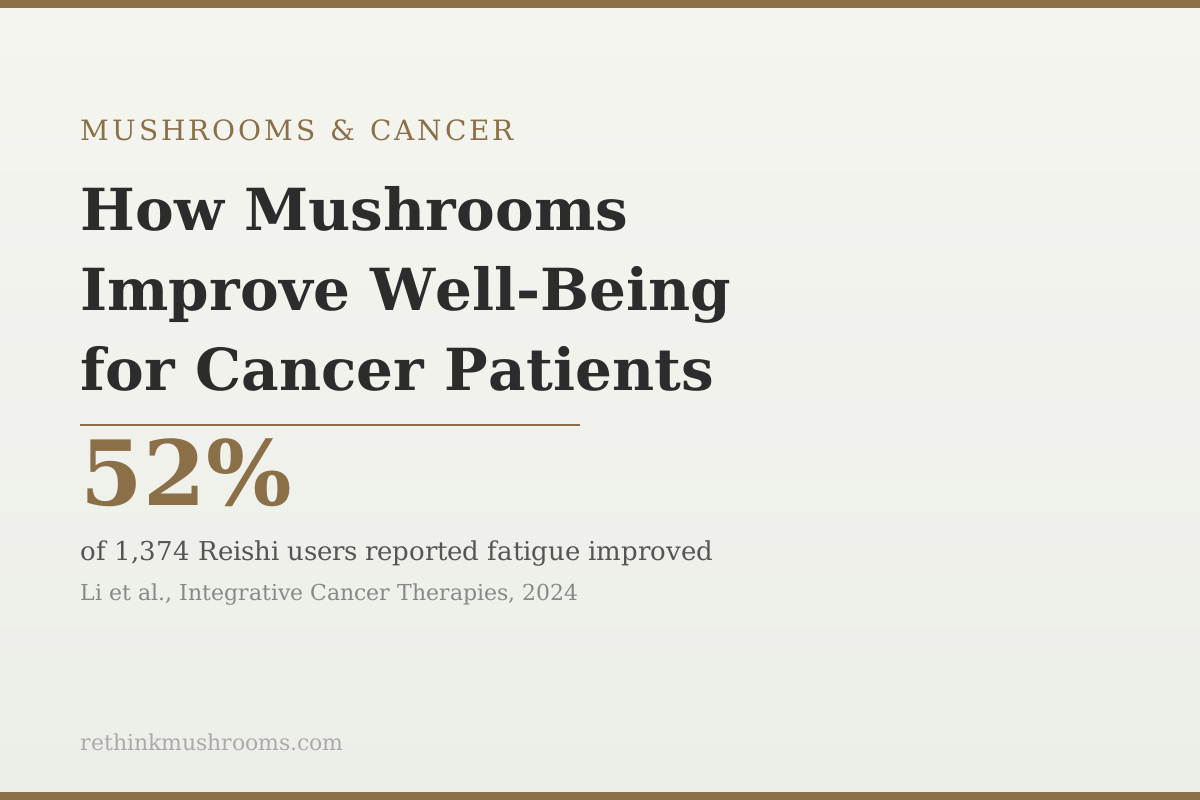
52%
of 1,374 Reishi users with cancer reported fatigue improved quite a bit or very much (Li et al., 2024)
4 mechanisms
beta-glucan immune restoration, triterpenoid stress response, gut support, antioxidant activity
4 weeks
timeframe in which Reishi spore powder significantly improved fatigue, sleep, and appetite vs placebo (Zhao et al., 2012)
Narayanan et al., Current Oncology Reports, 2023 (via Jeitler et al., Front Pharmacol, 2020)
 View as image ↗
When cancer patients ask about medicinal mushrooms, they are usually asking about two different things at once: can mushrooms help with the cancer itself, and can mushrooms make the experience of treatment less miserable? The first question involves a large and complex body of anti-tumor research. The second is where the strongest and most practically relevant clinical evidence sits, and it is the question this article addresses.
Cancer treatment, particularly chemotherapy and radiation, disrupts four biological systems that affect daily well-being: immune function (depleted by the treatment itself), inflammation (elevated by both tumor burden and treatment toxicity), gut health (damaged by chemo, reducing nutritional absorption and appetite), and oxidative stress (increased throughout, contributing to fatigue and cognitive impairment). Medicinal mushrooms work on all four. Here is how, with the clinical evidence that connects the mechanisms to actual patient outcomes. For the broader overview, see medicinal mushrooms in cancer treatment: a complete guide.
Key Takeaways
- Beta-glucans from medicinal mushrooms restore NK cell activity and normalize cytokine profiles during cancer treatment, and a 2021 systematic review found this immune restoration directly correlates with reduced fatigue symptoms and improved quality of life (van Steenwijk et al., Nutrients, 2021)
- Reishi polysaccharides improved NK cell counts, CD4+/CD8+ immune cell ratios, and quality of life scores in advanced lung cancer patients in a 2005 clinical trial, the clearest demonstration that immune restoration produces measurable QoL improvement (Gao et al., J Medicinal Food, 2005)
- A 2004 clinical trial found Agaricus blazei extract significantly raised NK cell activity AND quality of life scores in gynecological cancer patients undergoing chemotherapy; the two outcomes moved together (Ahn et al., Int J Gynecological Cancer, 2004)
- A 2020 narrative review of 9 RCTs and controlled clinical trials of medicinal mushrooms in cancer found improvements in QoL, reduced chemotherapy side effects, and improved hematologic parameters in most studies reviewed (Jeitler et al., Frontiers in Pharmacology, 2020)
- Lentinan (the polysaccharide from shiitake) combined with S-1 chemotherapy produced significantly longer median survival AND improved tolerability compared to chemotherapy alone in gastric cancer patients (Ina et al., World J Clinical Oncology, 2011)
- Meta-analysis of RCTs of Coriolus versicolor and Ganoderma as cancer adjuncts found statistically significant improvements in quality of life scores and immune parameters versus conventional treatment alone (Zhong et al., Frontiers in Pharmacology, 2019)
Why Cancer Treatment Depletes Well-Being at the Biological Level
Before explaining how mushrooms help, it is worth being specific about what they are helping against.
Chemotherapy and radiation work partly by killing rapidly dividing cells. Tumor cells divide rapidly, which makes them targets. But so do immune cells, gut lining cells, and hair follicle cells. This is why chemotherapy produces immunosuppression (fewer functional immune cells), nausea and appetite loss (gut lining damage), and fatigue that persists long after treatment.
The fatigue in particular is not the normal tiredness that rest resolves. Cancer-related fatigue has a specific biological signature: elevated inflammatory cytokines, particularly IL-6 and TNF-alpha, circulate continuously and signal the brain to reduce activity. This is the same mechanism as the fatigue during flu infection, but chronic rather than temporary. Normal sleep, nutrition, and rest improve the fatigue somewhat but do not resolve it without also addressing the cytokine elevation.
Gut damage reduces the absorption of nutrients that support energy and mood, compounds the appetite problems, and disrupts the gut microbiome, which in turn affects immune signaling through gut-associated lymphoid tissue.
For the complete evidence picture on each of these symptom areas, see mushrooms and quality of life during cancer treatment, mushrooms for cancer-related fatigue: evidence review, and mushrooms and appetite during cancer treatment.
Beta-Glucans and the Immune Pathway to Better Energy
Beta-glucans are the primary pharmacologically active compound class in most medicinal mushrooms used as cancer adjuncts. They activate the innate immune system through two receptors: Dectin-1 (on the surface of macrophages, dendritic cells, and neutrophils) and toll-like receptors. When beta-glucans bind these receptors, they trigger what immunologists call trained immunity: a reprogramming of immune cell behavior toward enhanced and more calibrated responsiveness.
In the cancer context, this training has a specific consequence: inflammatory cytokine levels normalize. Chemotherapy often creates a pattern of chronic low-grade inflammation even as it suppresses immune cell counts. Beta-glucan-mediated immune training can help correct this paradox, reducing the inflammatory cytokine burden that drives fatigue while rebuilding the functional immune cell populations that chemotherapy has depleted.
A 2021 systematic review of beta-glucan adjuvant trials specifically in cancer patients found evidence for improvements in quality of life, immune cell counts, and tolerability of conventional treatments.[1] The review identified the Dectin-1 and toll-like receptor mechanisms as the primary pathway through which these improvements occurred: beta-glucans modulate innate immunity via these receptors, reducing the chronic inflammation that underlies fatigue and other symptoms.
The Clinical Evidence: NK Cell Restoration and Quality of Life Moving Together
The abstract mechanism becomes concrete in studies that measured both immune markers and patient-reported quality of life in the same trial.
Gao and colleagues gave water-soluble Reishi polysaccharides to advanced lung cancer patients and measured both immunological parameters and quality of life scores.[2] The patients receiving Reishi polysaccharides showed improvements in NK cell counts (natural killer cells, the immune cells responsible for identifying and destroying cancer cells and virus-infected cells), CD4+/CD8+ T-cell ratios (a measure of immune balance between helper and cytotoxic immune cells), and quality of life scores on standardized measures.
The significance of this study is in the correlation: the immune improvements and the quality of life improvements occurred together, in the same patients. This is not proof of causation, but it is consistent with the mechanism described above: immune restoration reduces inflammatory cytokines, which reduces fatigue and improves energy, which improves quality of life.
Ahn and colleagues documented the same correlation more explicitly in 2004, testing Agaricus blazei extract in gynecological cancer patients undergoing chemotherapy.[3] Patients taking the extract had significantly higher NK cell activity than controls, and they also had significantly higher quality of life scores, with documented improvements in physical function and emotional well-being. The NK cell activity and the QoL scores moved in the same direction, in the same patients.
Triterpenoids, Inflammation, and Sleep
Beta-glucans are water-soluble and primarily activate immune pathways. Triterpenoids, the fat-soluble compound class prominent in Reishi and Chaga, contribute to well-being through a complementary mechanism: they modulate the body's stress response.
Reishi triterpenoids (ganoderic acids) have documented effects on cortisol regulation, the stress-response hormone that, when chronically elevated, disrupts sleep architecture, suppresses immune function, and amplifies fatigue. For cancer patients, cortisol levels are often elevated due to both disease burden and the psychological stress of diagnosis and treatment. Correcting cortisol dysregulation can improve sleep quality and reduce the subjective experience of fatigue.
A 2020 narrative review of medicinal mushrooms in integrative oncology, covering 8 RCTs and 1 controlled clinical trial, found improvements in quality of life, reduced chemotherapy side effects, and improved hematologic parameters in most of the studies reviewed.[4] The review concluded that integration into standard oncology care with physician oversight was warranted based on the evidence.
The Zhao 2012 pilot RCT is the most detailed single study on these symptoms.[5] In 48 breast cancer patients undergoing endocrine therapy, Reishi spore powder significantly improved fatigue, physical function, global quality of life, sleep disturbance, and appetite compared to placebo within 4 weeks. Sleep disturbance is particularly worth noting: Reishi's effect on sleep in cancer patients is distinct from sedative effects and appears to reflect improved cortisol regulation and reduced inflammatory signaling at night, when both should be lower to support restorative sleep. For the specific mechanism of Reishi's sleep effects, see how Reishi improves sleep quality without sedation.
Lentinan: Where Well-Being and Survival Overlap
The most clinically significant result in the well-being literature involves lentinan, the beta-1,3-glucan polysaccharide isolated from shiitake mushrooms, which has been used as a cancer adjuvant in Japan since the 1980s.
Ina and colleagues showed in 2011 that gastric cancer patients receiving lentinan alongside S-1 chemotherapy had significantly longer median survival than patients receiving S-1 alone, AND reported improved tolerability and a reduced side effect burden.[6] This is the most compelling evidence that the immune-modulating effects of mushroom polysaccharides can simultaneously improve patient well-being and affect disease outcomes. The two effects are not necessarily separate: patients who tolerate treatment better often complete more treatment cycles, and completing more cycles correlates with better outcomes.
For the complete evidence profile on lentinan, including its regulatory approval in Japan, see lentinan: the shiitake compound approved for cancer treatment in Japan.
The Emotional Dimension: A Different Category of Mushroom-Based Intervention
No summary of mushroom well-being research in cancer patients is complete without acknowledging a separate, and much more powerful, category of evidence, one that involves a fundamentally different compound and intervention type.
Goodwin and colleagues published results in 2024 from a clinical trial of psilocybin in advanced cancer patients.[7] Psilocybin is the psychoactive compound in certain mushroom species (Psilocybe genus), and its clinical investigation is entirely separate from the medicinal mushroom supplements discussed in the rest of this article. Reishi, turkey tail, and shiitake are not psychoactive; psilocybin is.
In the Goodwin trial, a single administered dose of psilocybin in a supervised clinical setting significantly reduced existential distress, anxiety, and depression in advanced cancer patients, with sustained emotional well-being improvements at 6-week follow-up. For patients with advanced cancer, existential distress (fear of death, loss of meaning, anticipatory grief) is often the most debilitating dimension of well-being and the one that conventional medicine has the least to offer.
The two categories (adaptogenic medicinal mushrooms for physical symptoms like fatigue, sleep, and appetite, and psilocybin for the psychological and existential dimensions of advanced cancer) represent different modalities, different compound classes, different regulatory statuses, and different stages of clinical research. Both involve fungal compounds. They should not be conflated.
The Meta-Analysis: Across Multiple Species and Preparations
The clinical evidence described above is not isolated to individual studies. Two systematic analyses provide a cross-species overview.
The Zhong 2019 meta-analysis pooled data from RCTs of Coriolus versicolor (turkey tail) and Ganoderma lucidum (Reishi) as cancer adjuncts and found statistically significant improvements in quality of life scores and immune parameters versus conventional treatment alone.[8]
The Dan 2023 scoping review of medicinal mushroom trials in gastric, breast, and colorectal cancer found that all nine of the RCTs and controlled clinical trials included in the review reported benefits, including improvements in QoL and immune function, across preparations including Lentinus edodes (shiitake), Coriolus versicolor (turkey tail), and Agaricus sylvaticus.[9]
The pattern across species is not coincidental. Beta-glucans, the primary mechanism compound class, are present in all medicinal mushrooms. The specific triterpenoid profiles differ by species, but the fundamental immune-modulating and anti-inflammatory activity of beta-glucans is structurally conserved across the fungal kingdom.
This means the choice of specific mushroom species matters less than the quality and dose of beta-glucans in the product. For the specific data on clinical outcomes by symptom, including tables of which studies measured what improvements, see mushrooms and cancer quality of life: fatigue, sleep, and emotional well-being data.
Well-Being Beyond Active Treatment
One underreported observation in the literature is that the QoL benefits of medicinal mushrooms appear to persist into remission, not just during active treatment.
Ohno and colleagues observed improvements in physical function, social function, and overall quality of life in cancer patients in remission who consumed Agaricus blazei extract.[10] This suggests that the immune-modulating and anti-inflammatory effects remain relevant after treatment ends. Post-treatment fatigue, sometimes called cancer-related fatigue syndrome, can persist for months to years after chemotherapy completion. The same beta-glucan immune pathway that helps during active treatment may continue to support immune reconstitution and cytokine normalization in the recovery phase.
For the broader cancer adjunct evidence base and safety considerations, see the evidence for mushroom-based cancer adjuncts: a research review and Ganoderma lucidum as a cancer adjunct: clinical evidence.
The Bottom Line
Medicinal mushrooms improve well-being in cancer patients through four mechanisms: beta-glucan immune restoration (reducing inflammatory cytokines that drive fatigue), triterpenoid stress-response modulation (improving cortisol regulation and sleep), gut microbiome support (maintaining appetite and nutrient absorption), and direct antioxidant activity. Clinical studies show NK cell restoration and quality of life improvements moving together, with the most direct evidence coming from the Zhao 2012 Reishi RCT (fatigue, sleep, appetite all improved vs placebo in 4 weeks) and the Ahn 2004 trial (NK cells and QoL improved together in gynecological cancer patients). Meta-analysis and systematic reviews confirm improvements across species and preparations. Psilocybin represents a separate and distinct mushroom-based intervention for the psychological dimension of advanced cancer, not a standard dietary supplement.
Frequently Asked Questions
Sources & References
- 1. Source details for this reference are not yet available.
- 2. Source details for this reference are not yet available.
- 3. Source details for this reference are not yet available.
- 4. Source details for this reference are not yet available.
- 5. Source details for this reference are not yet available.
- 6. Source details for this reference are not yet available.
- 7. Source details for this reference are not yet available.
- 8. Source details for this reference are not yet available.
- 9. Source details for this reference are not yet available.
- 10. Source details for this reference are not yet available.